Intro: A vaccine that changed everything
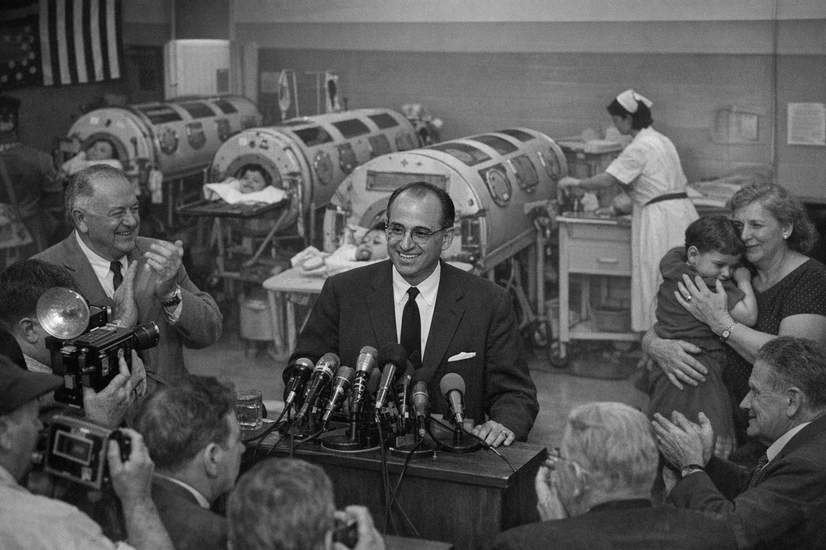
On 12 April 1955, Jonas Salk told the world that his polio vaccine worked. The reaction was enormous — relief, celebrations and a sense that a massive shadow had lifted. Salk also made a loud, deliberate choice: he would not turn the vaccine into a private moneymaker. He insisted it belonged to everyone, likening the idea of owning it to trying to own something as universal as the sun.
Why polio haunted summers
Polio wasn’t just another childhood illness — it was the stuff of nightmares. In 1952 the United States recorded tens of thousands of cases, and a small percentage of infections could leave people unable to move or breathe on their own. The iron lung — that bulky metal respirator — became the grim symbol of the disease, and families dreaded the warmer months when outbreaks peaked.
Hospital staff remember children who were fine one day and trapped in a respirator the next. Nurses washed their hands obsessively and went home with chapped, raw skin because preventing spread was all they had.
Two very different game plans
By the late 1940s researchers knew polio traveled through the gut and into the bloodstream, which opened the door to vaccine work. Two scientists took different routes. Albert Sabin favored a weakened live virus given orally — a slow, deliberate laboratory-style approach. Jonas Salk, by contrast, worked faster and more like a focused research machine, aiming for a killed-virus vaccine. He had backing from the March of Dimes, a new fundraising movement that asked ordinary people for small donations and pumped massive resources into polio research.
Lab hustle: experiments, sewage samples and family volunteers
Salk set up his lab in a busy hospital, so the team had direct access to patients and samples. The vaccine used an inactivated version of the virus, which is fiddly to make and test. Progress looked messy at times — technicians were literally sending specimens from wards down to basements — but the work built up slowly until the clues were there.
Salk’s confidence grew enough that he tried the shots on people closest to him first: his lab team, his wife and his children. Yes, there are anecdotes about him sterilizing needles at home and injecting family members — the kind of hands-on faith that sends your relatives into a mixture of pride and mild terror.
The giant trial and the nation’s exhale
To prove the vaccine’s worth they needed to scale up. In 1954 the largest medical trial of its time launched: dozens of thousands of teachers helped administer doses to nearly two million children. After a year of careful checking, the results were announced in April 1955. The news triggered nationwide celebrations — a rare moment when science felt like a public victory. Within a year reported polio cases in the US plunged dramatically, and within a decade the disease was nearly gone from the country.
Fame, institutions and a sugar cube
Salk became famous overnight, yet he tried not to let the spotlight derail him. He went on to found the Salk Institute — a research center meant to be a creative, non-profit haven for science minds. Meanwhile Sabin’s oral vaccine, easy to give and perfect for mass campaigns, helped eliminate polio in many parts of the world and was famously delivered on sugar cubes in school campaigns — a fact that reportedly nudged a certain tunewriters’ imagination and inspired a very sweet movie song.
Both researchers resisted patenting their vaccines; they wanted wide access rather than profit, and keeping costs low helped vaccination campaigns spread.
Why blind alleys deserve applause
Salk liked to think that unexpected setbacks weren’t failures but signposts to new ideas. That mindset — quick to pivot, ready to seize an unforeseen lead — was part of what got the vaccine across the finish line. His work, and the work of countless others, turned a terrifying childhood disease into something we can now mostly forget, which is exactly the kind of quiet miracle most of us experience only infrequently.