When a dental X-ray played detective
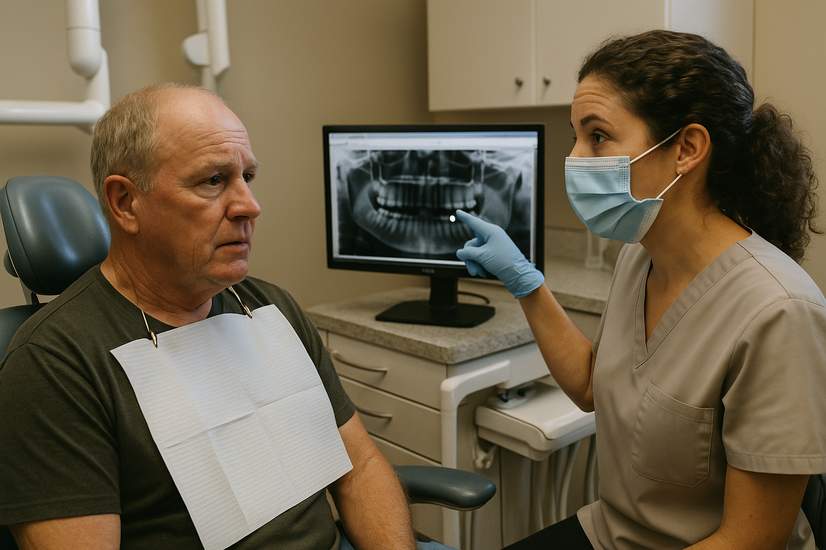
Mike Strawn popped into a local dentist’s office expecting the usual — hello, cleaning, maybe a polite lecture about flossing. Instead, a panoramic X-ray caught the eye of his dentist, Dr. Nicole Massetti, and that little white speck on the image turned out to be a big deal. What started as a routine new-patient visit quickly became a life-saving heads-up.
What the dentist actually saw
On the X-ray, Dr. Massetti noticed radio-opaque (basically, bright white) spots in the region where the carotid artery sits. Those bright bits suggested calcification — a warning sign that blood flow to the brain could be jeopardized. After further medical tests, Mike learned that one of his carotid arteries was around 75–80% blocked. Yikes.
From surprise to surgery
Mike was stunned because two years earlier a heart calcium scan had come back zero, so this wasn’t on his radar at all. Thanks to the dentist’s quick referral, he saw the right specialists, had follow-up imaging, and ultimately underwent surgery to remove the blockage. He sent photos to Dr. Massetti afterward — and yes, she got emotional seeing that he’d made it through.
Why dentists can spot more than cavities
Panoramic dental X-rays aren’t just for teeth and jaws. When examined carefully, they can reveal calcifications near the carotid artery in a small percentage of patients — experts estimate somewhere around 2–5%. Dentists can’t officially diagnose vascular disease from that single image, but they can recognize suspicious signs and urge patients to follow up with a primary care doctor or cardiologist.
Teamwork: health care’s secret sauce
Mike’s case highlights how different health professionals working together can make a huge difference. When a dentist alerts a patient and communicates with physicians, it creates a safety net that can catch serious problems early — before they turn into emergencies like a stroke.
No one likes surprise health plot twists — prevention helps
Routine screenings and checkups — whether at your dentist, your PCP, or a specialist — matter. Small, seemingly boring appointments can reveal big issues. Mike’s story is a reminder to take these checkups seriously and to listen when a provider tells you to follow up.
Takeaway (short and sweet)
Don’t skip your dental X-rays. They might save more than your smile. Also, if a clinician looks concerned, assume they mean it — it could be the difference between a weird story and a real recovery.