The daily battle (and a weird little gadget)
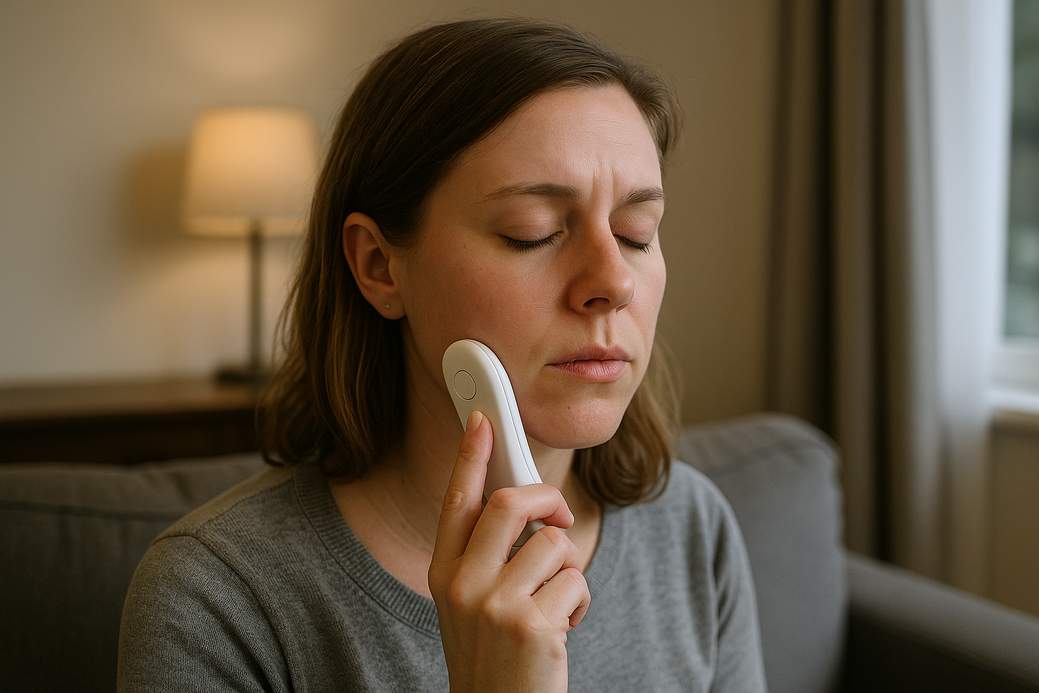
More than a billion people worldwide know migraines are not just headaches — they’re full-blown, plot-twist episodes that can wreck a day, a week or sometimes an entire life. Take Megan: every morning she uses a palm-sized device under her jaw that tingles her face until the corner of her lip twitches. It sounds odd, but for her it’s a ritual that helps ward off the next migraine ambush.
Why treating migraine feels like herding cats
Migraine is infuriating because it wears many masks. Some people get a one-sided throb, others puke, some see strange lights (that’s called aura), and about a quarter of sufferers get that visual drama. Three out of four migraine sufferers are women, and kids can get them too — sometimes as stomach aches. There’s no single objective test, no one-size-fits-all diagnosis, and that makes treatment hit-or-miss.
Acute fixes versus long-term prevention
Some folks knock an attack out with over-the-counter painkillers; others need migraine-specific drugs aimed at receptors or blood-vessel behaviour. Problem: pop pain medication too often and you can trigger medication-overuse headaches — the universe’s way of saying “too much of a good thing.” Many people would rather stop attacks from starting, and that’s pushed research into preventive approaches and repurposing drugs from other fields.
The CGRP story: molecules that flipped the switch
Back in the lab, researchers noticed a protein fragment called CGRP shows up in big amounts during attacks. Think of CGRP as a volume knob that cranks up nerve sensitivity. It isn’t necessarily the root cause of migraine, but it’s a useful target. Block the CGRP signal and you can quiet the overexcited nerves. That discovery gave rise to a family of drugs that have helped many people — some seeing dramatic reductions in attack frequency, others seeing only modest gains. The results are promising but not magical.
New molecular targets: more switches, more hope
CGRP wasn’t the only scalp-saver found in the lab. Other peptides such as PACAP, VIP and orexins have shown ties to migraine, and each offers a different biochemical latch to unlock. Some of these are being tested as both attack treatments and preventive options. In short: the peptide party is getting crowded, and that’s good news for people who haven’t yet found relief.
Botox: not just for forehead worries
Here’s a fun twist: a cosmetic treatment turned out to help people with chronic migraine. Botox injections, given carefully by specialists around the head and neck, can reduce attack frequency for many patients. Scientists first thought muscle relaxation explained it, but Botox also seems to damp down CGRP release in sensory nerves. It’s not an overnight miracle for everyone, but for some it’s a major step toward normal life.
Gadgets, zaps and the era of neuromodulation
For people who can’t or don’t want more pills, electrical and magnetic devices are becoming household names. These gadgets send tiny pulses to nerves involved in headache pathways — vagus nerve stimulators, forehead pads, armbands, and even crown-like headsets. Some people use them daily to prevent attacks, others to stop one mid-flight. They’re not cheap and approval varies by country, but they add another non-drug option to the toolkit.
Nicknames like “nose buzzer” and other weirder ideas
Researchers have taken creative liberties: prototypes include a catheter that reaches a spot behind the nose and inflates a vibrating balloon to jostle nearby nerves. The mechanism isn’t fully understood; maybe the vibration calms inflammation inside the brain’s protective lining. There have also been attempts to implant electrodes near the back of the head. Some of those trials ended badly with infections or device removals, so the jury’s still out.
Why no single solution will rule them all
Migraine seems to be a group of related disorders rather than one neat disease. Think of treatment like a bookshelf: classic medicines on one shelf, modern peptide-targeting drugs on another, neuromodulation gadgets somewhere else. Clinicians pick the shelf (or shelves) that best match each patient’s story — there’s no universal best-seller.
The brain and the rest of your life
Experts now say we should treat migraine as a chronic brain state, not just episodes to be extinguished. Lifestyle stuff matters: sleep habits, hydration, exercise, and stress management can all shift how often attacks show up. Psychological approaches such as CBT, relaxation techniques and mindfulness are also commonly part of a long-term plan.
Putting the pieces together
For many sufferers, relief comes from a mix: medications, devices, targeted injections like Botox, and sensible lifestyle tweaks. Some people see rapid improvement with a single tweak, others need a toolbox approach. Megan’s combo — daily neuromodulation, physical therapy, exercise, mental-health care and diet changes — didn’t fix everything at once, but it stitched the pieces together enough for her to leave the house again.
The outlook
We’re not at a definitive cure yet, but the field is busier and more creative than ever. New drugs targeting different peptides, smarter use of Botox, and weird-but-promising devices are all expanding options. For anyone with migraine, that means more chances to find something that actually works — even if it takes trying a few shelves on the bookshelf first.