Quick recap
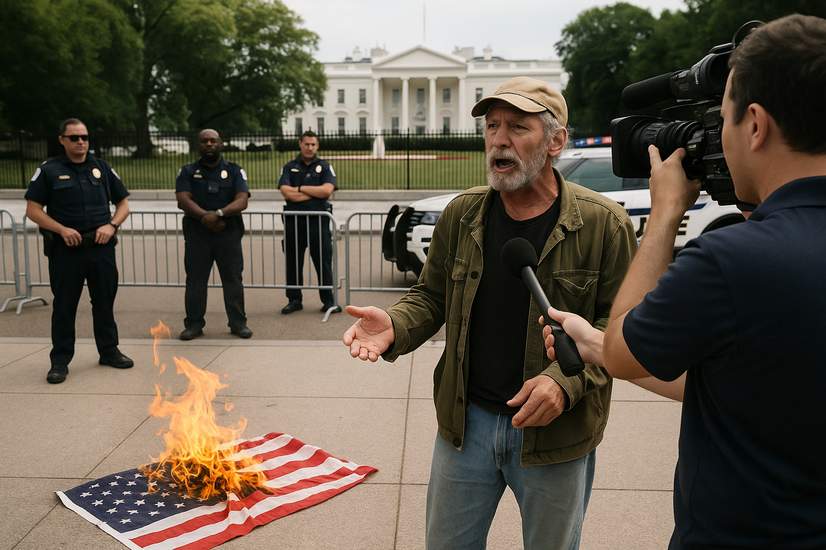
Federal prosecutors in Washington, D.C., quietly moved to dismiss the case against Jan Carey, the man arrested last year after he set an American flag on fire on the sidewalk outside the White House. The arrest followed a presidential executive order that pushed the Justice Department to look into incidents of flag burning — and Carey’s little public spectacle wound up squarely in that spotlight.
What he was charged with (spoiler: not “flag burning” specifically)
Carey was hit with two misdemeanor counts: one for starting a fire outside of a designated area, and another for lighting a blaze in a way that could damage property or park resources. Both offenses carried penalties ranging from fines to up to six months behind bars. Carey had entered a not guilty plea and was contesting the indictment when prosecutors decided to drop the charges.
The on-the-ground moment
A local TV clip captured the incident and Carey speaking on camera. He identified himself as a veteran and said his action was a deliberate protest of the president’s order — basically, he wanted to test whether authorities would actually pursue a case. The U.S. Attorney’s Office didn’t immediately comment on the decision to back off.
Why this is legally messy
The backdrop is a constitutional tug-of-war. The Supreme Court long ago ruled that burning the flag is symbolic speech protected by the First Amendment, so criminalizing flag burning outright is a non-starter. Still, the president’s executive order urged prosecutors to pursue flag-burning cases when they intersect with other, content-neutral laws (like rules about open fires or damage to property) or when the act crosses into things like incitement or fighting words. That strategy was an attempt to thread the needle around the high court’s precedent.
Defense reaction
Carey’s lawyer called the government’s decision a major win for free speech, saying that trying to criminally punish someone for expressive conduct singled out by a presidential directive posed a serious threat to constitutional rights. The attorney framed the DOJ’s withdrawal as a vindication and a hopeful sign for others who might be susceptible to politically motivated prosecutions.
What comes next
Dropping the case doesn’t settle the bigger questions: the administration has pushed for harsher penalties for flag burning in the past, and critics say the executive order risks encouraging selective enforcement. For now, though, this particular prosecution looks to be dead in the water — a reminder that protest stunts can spark legal fireworks, but also that constitutional limits still matter.
Bottom line
Jan Carey’s flag-burning stunt got him arrested, briefly turned the Justice Department into a headline, and ultimately resulted in charges being withdrawn — which, depending on your viewpoint, is either the system working or a political cliffhanger that deserves popcorn.