Meet the wall: not your average exhibit
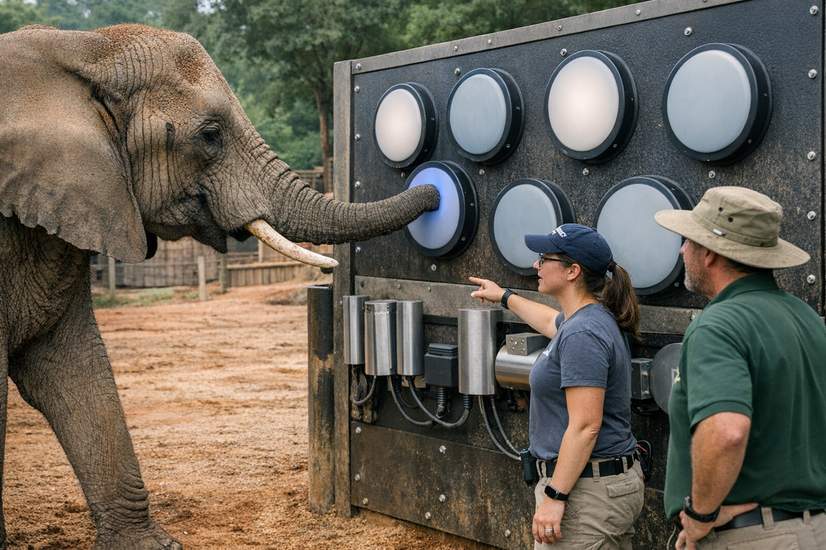
Think of it as a giant, interactive piano for elephants — but with fewer Chopin pieces and more rumbly, low-end vibes. Researchers from Georgia Tech teamed up with the care team at Zoo Atlanta to build a sensory wall designed to keep elephants curious, engaged and, frankly, entertained.
Why sound (and not soap operas)?
Elephants are built to feel the world in ways we barely notice. They pick up low-frequency tones and vibrations through their feet and trunks, which helps them chat across long distances in the wild. Instead of blasting recordings of jungle gossip, the team opted for simple, deep tones that stimulate without accidentally saying anything confusing to the herd.
How the gizmo actually works
PhD student Arianna Mastali led development of the system. The wall produces basic low tones when an elephant interacts with it — like poking a hole with a trunk — which rewards exploration. Zoo Atlanta’s senior elephant care specialist, Kirby Miller, helped tune the features so different interactions encourage different behaviors, whether that’s trunk manipulation, object play or just some tactile fun.
Proof it’s working: the elephants noticed
Short version: the elephants started spending a lot more time with it. The zoo reports a big uptick in how much the animals engage with the wall, which is exactly what enrichment is supposed to do — create interesting, mentally stimulating experiences that break the monotony of zoo life.
What’s next: less duct tape, more computer vision
The team is moving away from replaceable parts and toward smarter detection. Instead of relying on fragile physical switches, they’re building a camera-and-computer-vision setup that recognizes when a trunk is present and triggers the tones. That makes the system tougher against wear-and-tear and better at running on its own long-term.
Why keepers are cheering
Care staff say this kind of enrichment is something they can’t easily provide by hand every day. The tech acts like an extra pair of hands (or trunks), giving animals variety without burning out the team. The plan is for the zoo staff to run the system independently once the research phase wraps up.
Big-picture hope
Mastali and the Zoo Atlanta crew hope the interactive wall will keep serving the elephants for years, and potentially be adapted to amuse other species too. In a world where animal enrichment can be hit-or-miss, a little slapstick, low-frequency fun seems like a pretty great win for everyone involved.