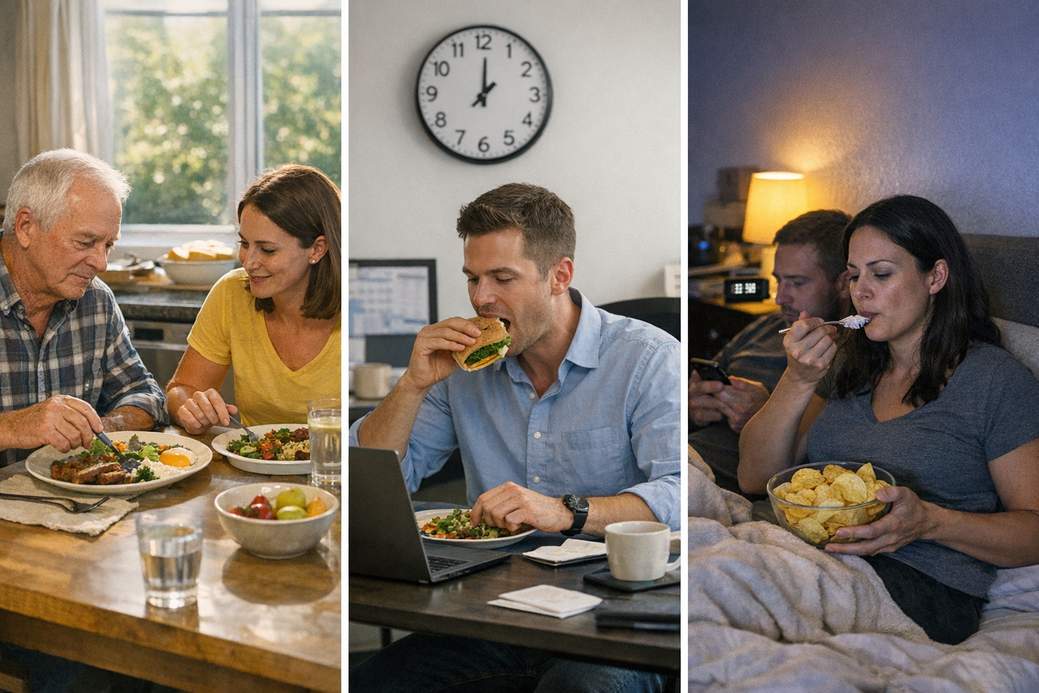
Quick spoiler
Your body has an internal clock and it cares when you eat. Eat big earlier, keep evenings light, and try to stop chomping a few hours before bed. Simple? Kinda. Effective? Yep.
Why mealtimes matter (not just what’s on your plate)
Turns out nutrition is part food + part timing. Scientists studying “chrononutrition” have found that our circadian rhythm — the biological clock that tells us when to wake, sleep and feel peckish — also affects how we digest, burn and store calories. So eating the same burger at noon vs midnight can have very different outcomes for your body.
Little real-life experiments that make you go hmmm
Doctors noticed people on identical diets getting different results simply because one person ate earlier. Other small trials showed that late lunches can worsen blood sugar control and reduce the number of carbs you burn. In short: timing can change how well your body handles food.
Melatonin, insulin and the bedtime snack trap
As evening approaches, the sleep hormone melatonin rises. When melatonin is up, your glucose handling tends to get worse — you might spike higher and release less insulin after the same meal. Eating close to bedtime can create a mismatch between what your body expects and what you’re feeding it. Over time, that mismatch may contribute to higher blood sugar and raise diabetes risk for some people.
Later eating can actually make you hungrier
Eating late doesn’t just affect blood sugar — it can tweak appetite hormones, too. Later meals are linked to lower levels of the “I’m full” hormone and shifts that encourage fat storage instead of fat burning. So yes, midnight snacking may literally prime your body for more snacking tomorrow.
Big breakfasts, lighter evenings — good news for your heart
Large studies suggest eating earlier in the day and extending the overnight fast (by finishing dinner earlier, not by skipping breakfast) correlates with better heart health. This is especially handy advice for people whose schedules already mess with their clocks — like shift workers — though practicalities vary by job and safety.
Are you a lark or an owl? Your chronotype matters
Some people are genuine morning birds and others are full-fledged night owls. Your chronotype influences when you naturally want to eat, how your hormones behave, and how well you process food. Night owls tend to eat later and choose more calorie-dense meals after dark, which can worsen glucose control and weight over time. If you’re an owl, nudging meals earlier step-by-step can help.
Practical tips — eat smarter, not harder
– Aim for consistent meal times and make your biggest meal earlier in the day.
– Load up on fibre-rich carbs (whole grains, beans, fruit) earlier when your body handles them best.
– Make dinner lighter and protein-forward: think fish, chicken or plant protein with veggies.
– If you need a late snack, pick something small and protein-rich rather than a sugar bomb.
– Try to finish your main evening meal at least three hours before bedtime when possible.
Parting bite
There’s no single magic dinner time that fits everybody, but the evidence nudges us toward eating more earlier and less later. Listen to your internal clock (and your stomach), aim for an earlier big meal, and give your body a few quiet hours before lights-out. Your metabolism — and probably your sleep — will thank you. Also: cooking a big lunch sounds like a delightful excuse to open a paella pan in the morning. Just saying.