A strangely privileged seat in the operating theatre
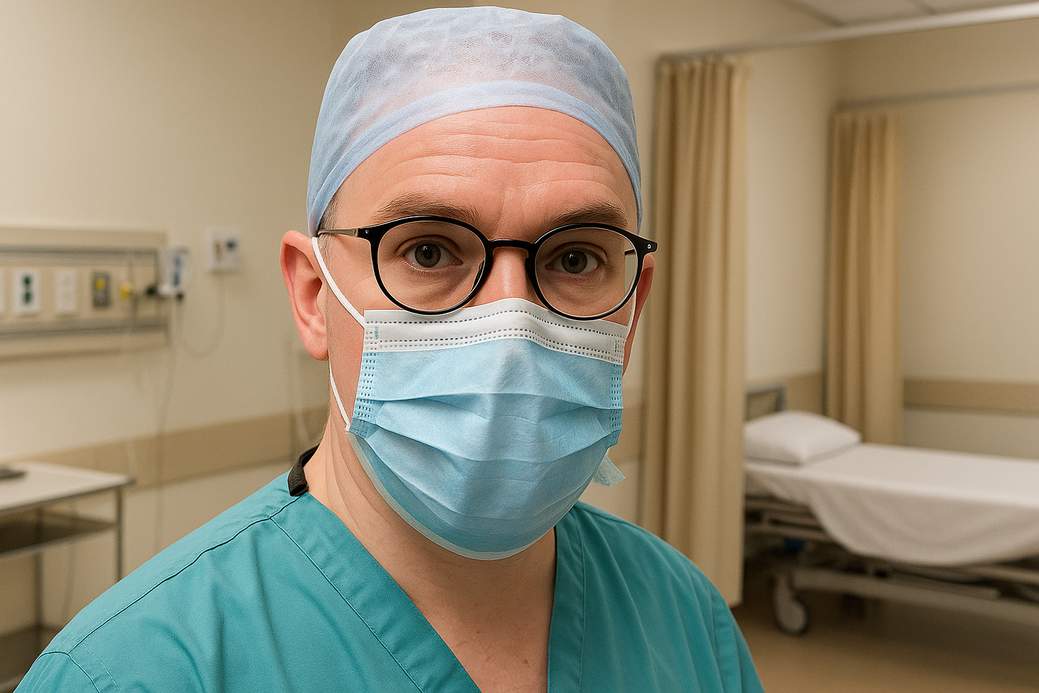
I turned up in scrubs and spent an afternoon at Edinburgh Royal Infirmary, standing at the back of an operating theatre while a team quietly got on with the delicate business of brain surgery. The room felt calm and focused, even though machines were beeping like an overeager orchestra.
On the screens there was a bright-white tumour from a cancer that began elsewhere and had sneaked into the brain. The surgeons needed to cut through a tiny patch of cortex — the outer layer tied up with memory and language — to reach the problem deep inside. The drill lifted a neat flap of skull, and the surface of the brain looked flushed and gently pulsing, oddly alive in a very clinical way.
From scalp to lab bench
One of the researchers from the University of Edinburgh, Dr Claire Durrant, stood nearby with a chilled container of artificial cerebrospinal fluid — a faux brain bath. In most theatres that bit of cortex would be medical waste. Here, with permission, it became research material.
When the surgeons handed over a thumbnail-sized slice of living brain tissue, it felt surreal: minutes earlier it had been part of a person’s own mind. The team treated it reverently; as Dr Durrant put it, it’s a precious gift on a terrible day for the patient. We zipped across town to the university, carrying that tiny piece of human biology like contraband treasure.
How tiny slices are turned into big clues
In the lab the sample gets set in jelly and cut into wafer-thin slices — each only about 10–20 cells thick — then kept alive in special incubators. The team moves like a pitstop crew: quick, coordinated, and efficient. Their aim is to see what happens to connections between brain cells, the synapses, when exposed to the nasty proteins linked with Alzheimer’s disease.
Researchers deliberately expose these slices to amyloid and tau, the toxic proteins that pile up in affected brains. Under microscopes they can watch synapses break down and test whether any interventions can stop or reverse the damage. It’s slow, detailed work, but it lets scientists observe the biology of dementia in real human tissue rather than just models or mice.
Why some scientists are quietly optimistic
Working on fresh human brain tissue has given researchers new confidence. The evidence so far points to Alzheimer’s as a treatable disease, not an unavoidable part of being human — which means there’s a realistic route to therapies, researchers say. That kind of thinking fuels a hopeful vibe in labs that have spent decades frustrated by dead ends.
New drugs: not a miracle, but a foot in the door
Two drugs, lecanemab and donanemab, have shown they can slow the disease’s advance. They aren’t a cure and some clinicians argue the benefits are modest in day-to-day life. Neither drug is currently paid for by the NHS, but their existence changed the conversation — they proved targeting amyloid can have an effect and opened the door to more approaches.
It’s not just about one protein
Researchers are widening their focus. Some labs are studying brain immune cells called astrocytes and how inflammation, blood vessel health, genetics and lifestyle all interact with amyloid and tau. In one darkened corner of a lab, a scientist might be peering through a confocal microscope at star-shaped cells, while colleagues run experiments on synaptic survival elsewhere. Tackling Alzheimer’s will probably require multiple angles at once.
The near-, medium- and long-term goals
Scientists tend to describe three milestones: first, treatments that meaningfully slow or halt progression; second, ways to prevent the disease before it starts; and third, a true cure for people already showing symptoms — the hardest nut to crack. Some researchers think a very impactful treatment could arrive in five to ten years, especially if people are diagnosed early and treated before too much damage has occurred.
The bottom line
The human brain is ridiculously complex, so real proof will come from careful clinical trials and seeing results in actual patients. But between fresh human tissue studies, new drugs that show a path forward, and a multi-pronged research push, there’s genuine momentum. It’s not a guaranteed win, but for the first time in a long while, many in the field feel cautiously hopeful — and that’s worth something.