Why “calories in, calories out” is boring (and a bit wrong)
Calories aren’t tiny identical coins you drop into your body’s meter. The number on a packet doesn’t tell the whole story — when you eat something, how you eat it and even the tiny critters living in your gut all change the way those calories behave. So yeah, counting calories like they’re identical Monopoly money? Not the smartest move.
Timing: breakfast, dinner and the snack police
When you stack most of your energy earlier in the day — hello, big breakfast — studies have shown people tend to lose or maintain weight more easily than those who calorie-load in the evening. Narrowing the eating window (shift breakfast later, dinner earlier) can also lower overall intake without depriving you.
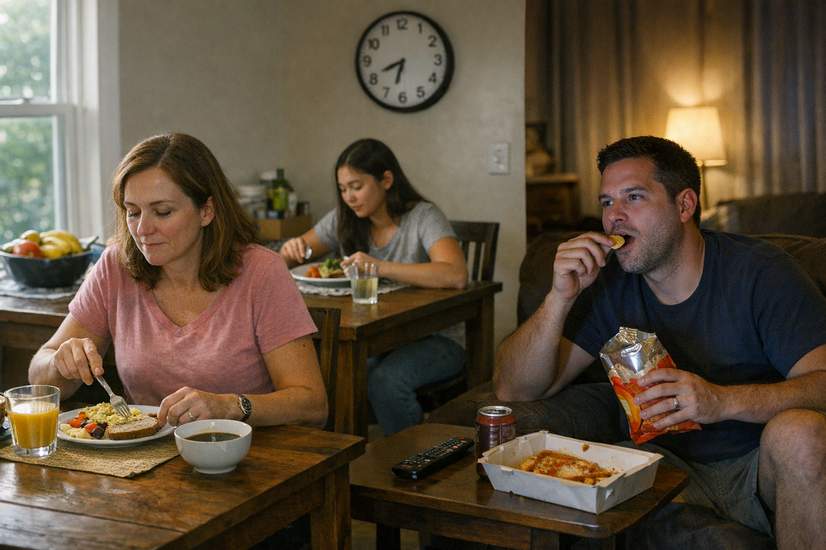
Also, late-night snacking isn’t just a guilty pleasure — munching after about 9pm has been linked to worse blood sugar and cholesterol profiles, which aren’t great for waistlines or hearts. Fun fact: in the UK and US, snacks make up roughly a quarter of daily calories, so snack-smartness really matters.
Slow down — your hormones need a minute
Eating like you’re in a speed-eating contest tricks your body. Slower meals give appetite hormones time to show up: cholecystokinin (CCK) starts to climb in roughly 15 minutes, and GLP-1 and PYY take about 30–60 minutes to peak and tell your brain “we’re good.” Eating slowly helps you feel fuller longer, reduces later munching and even tames blood sugar spikes.
There’s also a neat bit of overlap with medicine: GLP-1 is the same hormone that some modern weight-loss drugs mimic to lower hunger, so letting your own hormones work peacefully is a win.
Texture and processing: the sneaky calorie switch
How food is built affects how our bodies extract energy. Whole nuts, for example, can hide calories inside intact bits that pass through if you don’t chew thoroughly. Crush or grind those nuts and your body can gobble up more of the energy. The same goes for blended apple sauce versus a whole apple — the texture changes how fast you eat and how full you feel.
Ultra-processed food often wins the “easy-to-eat, easy-to-overconsume” award because manufacturers have fiddled with texture and structure so nutrients are released faster — which can make you eat more before your brain realises you’re full.
Your microbiome: the unpredictable accountant
Your gut microbes literally help process food, and everyone’s microbial mix is different. That’s why two people can eat the same snack and have totally different blood-sugar responses. Even identical twins can react differently. This microbial variability is one reason personalized nutrition is becoming a thing.
Quick, cheeky rules to eat smarter
– Make mornings count: consider a bigger breakfast and lighter evening meal.
– Try narrowing your eating window a bit — eat later or finish earlier and see what works.
– Stop inhaling your food: chew, savor, and give hormones time to work.
– Prefer whole, minimally processed foods over ultra-processed stuff.
– Add fiber-rich fruits, veggies and whole grains to feed both you and your microbes.
– Cut back on obvious sugar, salt and junk fats — your future self will thank you.
Bottom line (without the calorie guilt)
Calories aren’t useless, but they aren’t the whole story either. Swap rigid counting for smarter habits: time your meals, slow your chewing, choose real food, and keep your plate diverse. Your body — and your gut microbes — will do the rest, and you might find it’s a lot less miserable than calorie math.