Quick take
Ann Lee went from a poor, uneducated woman in 18th-century Manchester to the magnetic-but-mysterious leader of the Shakers — a religious group that looked like a spiritual commune, a design studio, and a social-services agency rolled into one. They built beautiful furniture, promoted equality and community living, demanded celibacy, and made a lot of people very uncomfortable.
From textile mills to trembling worship
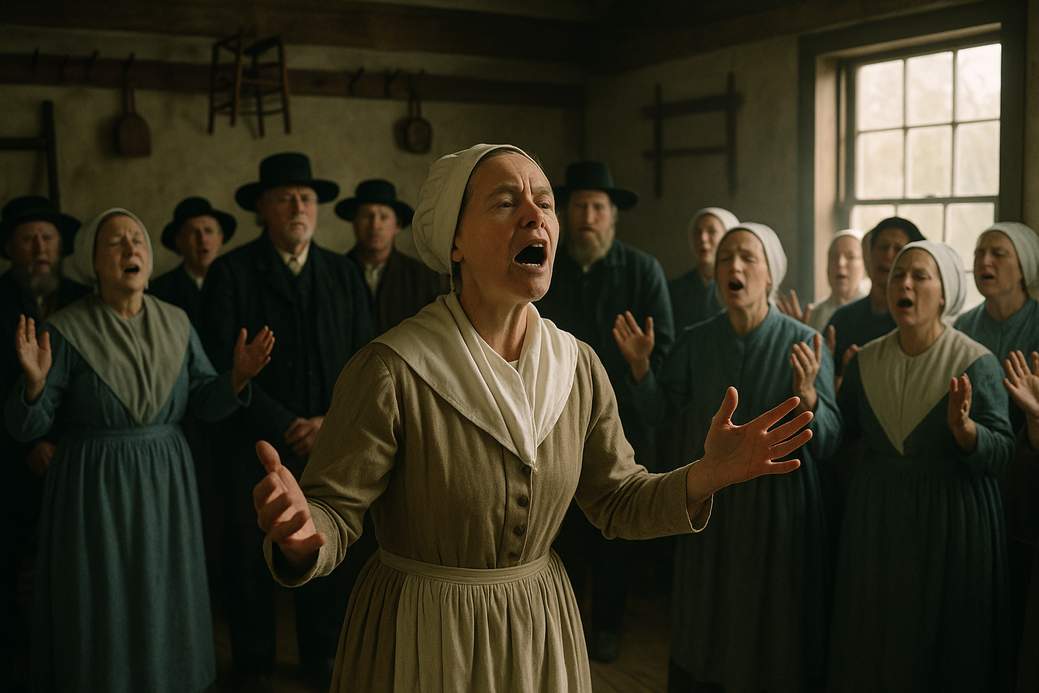
Born into a large, working-class family in 1736, Ann Lee never had the luxury of schooling. She worked odd jobs — including in textile production — and eventually joined a radical English sect known for ecstatic worship: the Wardley Society, later nicknamed the Shakers. Followers believed the second coming could arrive in female form and came to view Lee as that figure. She rose to leadership not through books or sermons on paper, but through personality, conviction and dramatic worship.
Beliefs that turned heads
The Shakers combined progressive ideas with practices that seemed downright weird to their neighbors. They preached equality between men and women, practiced communal ownership, refused military service, cared for orphans and elders, and insisted on celibacy. For a movement that also left a huge mark on American material culture, those social policies were the more radical legacy.
Across the Atlantic, into trouble
In 1774 Lee and a small group sailed to New York. The timing was awkward: revolution simmered, and the Shakers’ refusal to fight or swear political oaths drew suspicion. Lee was jailed for refusing to pledge loyalty, beaten and accused of strange things — even witchcraft — because people did not understand their pacifism and communal habits.
Rethinking family, religion and hierarchy
One standout Shaker idea was to reframe household and social life. In their eyes everyone in the community was a sibling in a big spiritual family, and gender roles were meant to be more equal than in wider society. That didn’t mean Shaker life was perfectly egalitarian — there were leadership structures and divisions — but compared with the era’s norms it was revolutionary.
Why celibacy and pacifism?
Lee insisted on sexual abstinence as a route to spiritual purity; some historians link this to her own traumatic experiences with childbirth and the deaths of her infants. Pacifism was another uncompromising stance: during the Revolutionary era the Shakers refused to pick up arms, which cost them social trust but cemented their identity as nonviolent communalists.
How she led without leaving manuscripts
Ann Lee didn’t write books. Her legacy is preserved through the memories and stories of followers, and through the institutions they built. Followers described her charisma and stubborn dedication: she reportedly declared she would not abandon her beliefs even under threat of death. That sort of certainty rallied people to the cause.
Afterlife of an idea
Lee died in 1784, but the movement kept growing: by the mid-19th century the Shakers numbered in the thousands. Over time the communities declined, and only a tiny number of Shakers remain today — a striking echo of a once-vibrant experiment in communal life.
Modern retelling: a movie and a reason to remember
The story has been revived on screen in a speculative musical about Lee’s life, starring Amanda Seyfried and directed by Mona Fastvold. The film reframes Lee as a fiercely principled outsider who pushed ideas about care, equality and communal responsibility long before those ideas were fashionable.
Why she still matters
Beyond quirky furniture and minimalist design, the Shakers pioneered practical social care: shelters for abused women, help for orphans, and community support for elders. Those initiatives predated formal social services in America, and they’re a big part of why Ann Lee’s oddball, stubborn experiment still catches our attention today.