Quick take
Aleksandar Vucic, the dominant figure in Serbian politics for more than a decade, admitted defeat after a surprise parliamentary result that hands a big victory to a youth-driven opposition known as the Students’ List. Officials projected the Students’ List would secure roughly 135–140 of the 250 seats, leaving Vucic’s Serbian Progressive Party with about 105 seats. Vucic later said his party drew around 1.7 million votes while the Students’ List collected about 2.2 million.
Election night energy (and honking)
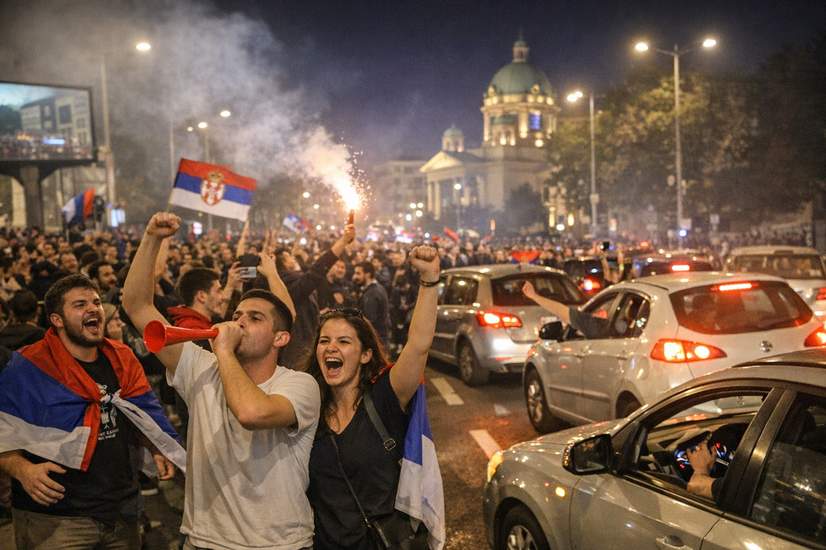
When the results started to land, the streets of Belgrade and other cities filled with jubilant students and supporters—horns blaring, chants breaking out, and spontaneous celebrations popping up like confetti. At his party event, Vucic acknowledged the loss but blamed independent media and alleged outside interference, even invoking an “American deep state.”
How we ended up here
Vucic has been the central figure in Serbia for 14 years, cultivating a strongman image and considerable control over politics and the media. He had stepped down as president recently to lead his party’s push to become prime minister. The momentum against him didn’t materialize overnight: it swelled after a tragic 2024 accident in Novi Sad that killed 16 people, which many blamed on corruption and sloppy renovation work—sparking sustained youth protests.
Meet the Students’ List (not your typical campaign squad)
Despite the name, the Students’ List was more of a movement than a roster of student candidates. The campaign was inspired and organized by university students, but the names on the ballot were a mix of little-known experts, athletes, farmers, artists and other non-establishment figures. The strategy: channel youthful energy and civic outrage into a broad, nonpartisan push to restore democratic norms and fix the economy.
Voting day: high turnout, tense moments
Turnout was extraordinary—estimates and monitors suggested it could climb to roughly 70%, a level not seen in Serbia for decades. Long lines formed at polling stations at home and abroad, and some diaspora voters had to cast ballots in the middle of the night because voting hours were tied to Serbian time. But the day wasn’t calm: riot police were visible around key sites, loyalist camps and large groups gathered in parts of Belgrade, and security vehicles were on standby.
Irregularities and international eyes
International and local monitors were watching closely. Observers reported dozens of problems including ballot-photographing (which can indicate voter pressure), attempts at buying votes, detentions, and reports of surveillance and cyberattacks targeting activists. The European Union—Serbia’s candidate country for membership—kept a close watch on the vote’s conduct and fairness.
Why this is a big deal
This result looks like more than just a change of seats: it’s the clearest sign yet that a grassroots youth movement can challenge an entrenched, media-savvy leader. The outcome is already being compared to recent electoral shocks in the region where young voters helped upend long-standing authorities, and it will almost certainly reverberate beyond Serbia’s borders.
What next?
With the Students’ List riding a wave of momentum, Serbia faces a period of fast political change and uncertainty. Expect negotiations, coalition-building, lots of opinion pieces, and more street-level celebration—or drama—until a clear governing majority is formed. One thing’s for sure: the Balkan political playlist just got a new, louder chorus.