Trigger warning: this post mentions suicide, violence and coercion. If this topic is likely to upset you, please take care or skip to the resources at the end.
Quick snapshot
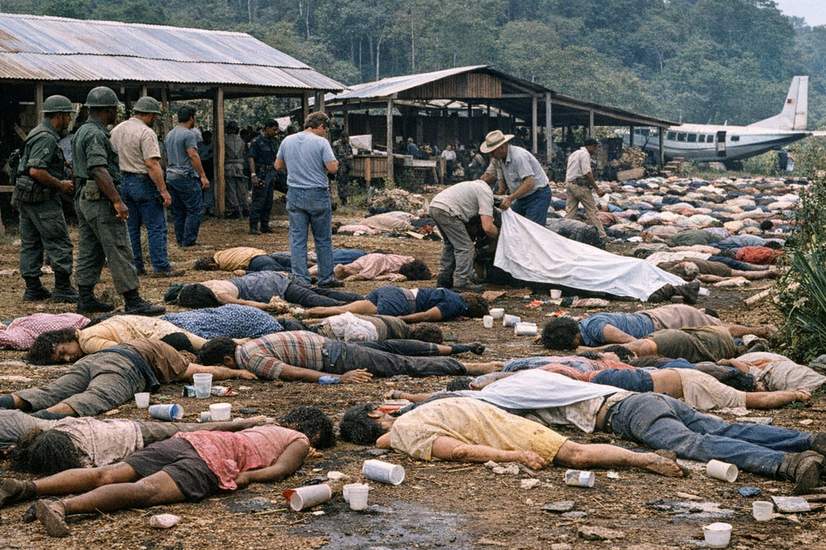
In the late 1970s, more than 900 people — including over 300 children — died in Jonestown, a remote settlement in Guyana linked to the Peoples Temple and its leader, Jim Jones. What began as a movement promising social care and racial inclusion ended in one of the most tragic events of the 20th century.
How it started: a preacher with a promise
Jim Jones grew up in a struggling household in Indiana, cut a charismatic figure, and launched the Peoples Temple in the 1950s. He sold a blend of gospel energy, communal living and social programs: healthcare, mutual aid and a message of racial harmony. That mix attracted a broad range of people who felt seen and useful. Former members say the Temple offered belonging, purpose and real services at a time when many had nowhere else to turn.
The pull: community, spectacle and control
Inside the Temple, services mixed uplifting music and theatrical faith-healing with political activism. For many members, it felt like joining a family or a cause rather than signing up for something sinister. But those who left later described a darker side: increasingly intense control, public punishments and leaders who acted very differently behind closed doors than they preached from the pulpit.
Climbing the ladder: politics and influence
By the 1970s Jones had moved his group to California and become a political player in San Francisco. He rubbed shoulders with politicians, campaigned locally and gained influence few religious leaders enjoy. Yet, underneath the public respectability, he was struggling with drug use and growing paranoia, which would make his behavior more erratic and dangerous.
Flight to Guyana: isolation as a strategy
After investigative reports and former members’ complaints raised alarms about abuse, Jones uprooted many followers to a commune in Guyana that came to be called Jonestown. For those who went, it was sold as a refuge — a utopia away from racism and political enemies. For Jones, it was also a way to cut people off from outside voices, making them easier to control.
Red flags and the fateful visit
Worried family members pushed for help and contacted officials. In November 1978, Congressman Leo Ryan traveled to Jonestown to investigate reports that people were being kept against their will. Some residents asked to leave with him. Tensions escalated quickly, and as Ryan’s party prepared to depart, they were ambushed at the airstrip. Several people, including Ryan, were killed.
How the tragedy unfolded
Following the airstrip attack, Jones addressed his followers and framed the events as evidence that outside forces would inflict terrible harm on them. In a horrifying turn, many members were persuaded — or forced — to take part in a mass killing that left hundreds dead after ingesting poisoned drink. Survivors and relatives describe a mix of coercion, confusion and crushing fear that made escape feel impossible.
Aftermath and memory
The Jonestown deaths left families, communities and investigators grappling with how one movement went so wrong. Survivors and researchers have since worked to preserve testimony and records so the people who died are not reduced to numbers. Today the event is studied as a tragic example of how charisma, isolation and paranoia can combine with terrible consequences.
Where to find more information
There are books, documentaries and archives that collect survivor accounts, investigative reports and primary materials for those who want to learn more. Institutions run by relatives and researchers keep records and personal stories available to the public, helping ensure the voices of those affected are heard.
Help and support
If this subject has raised strong feelings for you or someone you know, reach out for help. Organizations and helplines that provide support around suicide, trauma and grief can offer immediate advice and care. In the UK, for example, BBC Action Line lists resources; in other places contact local mental health services or emergency numbers.