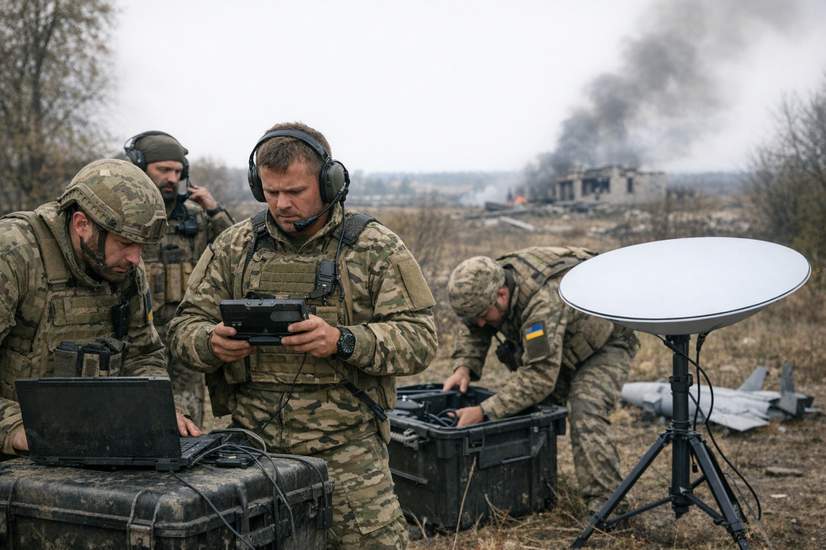
Quick version: Ukraine leans hard on Elon Musk’s satellite internet to steer drones, talk to troops, and generally keep its defense tech humming. Last week that lifeline hiccupped — drones lost their connection midflight, officials scrambled, and everyone suddenly remembered how much they rely on a private company’s constellation of satellites.
Why Starlink and Starshield matter
Think of Starlink as the internet in the sky and Starshield as its armored sibling for military use. Together they stitch sensors, weapons, and drone pilots into one networked messiah that Ukraine has used to punch above its weight. With fewer tanks and missiles than Russia, Ukraine has leaned on drones and smart comms — and that means these satellite links aren’t just nice-to-haves. They’re mission-critical.
What went wrong (short version)
Mid-October, Ukrainian units noticed that their military-grade dishes were suddenly being throttled: drones that traditionally cruised fine started dropping their links and sometimes the aircraft themselves. Reports say the system began cutting off units once they exceeded certain speeds, so fast-moving strike drones became unreliable and, in some cases, literally fell out of the sky. That surprised troops and commanders, and sent officials into a scramble to figure out who flicked the switch.
How the two networks differ
Both services ride the same fleet of low-Earth orbit satellites, but Starshield is the version with extra security and fewer built-in limits — it’s the one the U.S. government pays for and controls for military partners. The regular Starlink used by civilians and many frontline comms has an artificial speed cap (around 70 km/h), which is fine for cars but too slow for many strike drones. Starshield is meant to work at much higher speeds (the usual operational figure mentioned is around 160 km/h), so when the network started dropping links at speeds as low as ~90 km/h, Ukraine’s mid-range drone strikes were severely hampered.
Timeline highlights and the blame game
Reports trace the disruptions to around Oct. 13. Some officials later said limits were relaxed, but messages from Kyiv remained mixed. Ukrainian leaders publicly suggested Elon Musk ordered the throttling at the request of U.S. officials; Musk pushed back, saying the U.S. government controls the military-level product. Various media pieces and officials offered contradictory takes, so the chain of command for the slowdown stayed murky — the kind of bureaucratic mystery that makes headlines and keeps analysts caffeinated.
Contracts, capacity, and why there’s no easy backup
SpaceX has received U.S. contracts to supply Starlink and Starshield hardware to Ukraine — hundreds of terminals initially, with plans discussed to expand to thousands at the front. There’s no full substitute: competitors aiming to match Starlink’s coverage are far behind in satellite count, so Ukraine can’t simply switch networks overnight. Analysts estimated the recent degrade cost Ukraine tens of millions in lost drones and missions — not great for the war budget.
Other tech headaches: warnings and interceptors
The satellite issue wasn’t the only hiccup. Ukraine also missed early warning alerts for some Russian strikes in mid-October, and deliveries of interceptors like Patriots have been slower than Kyiv wants. Whether the intelligence gaps were technical failures, weather-related glitches, or something more political was debated publicly, but the upshot was the same: critical defenses weren’t firing on all cylinders when Ukraine needed them.
Who actually gets to flip the switch?
Short answer: it’s messy. SpaceX runs the satellites, the U.S. government funds and contracts access to military-grade service, and private statements from executives and politicians created a fog of responsibility. Some officials said a private company shouldn’t be able to unilaterally limit battlefield capabilities; others pointed out that defense contracts and national-security controls complicate the picture. Bottom line — control isn’t a single-button affair, but whoever ended the limits (or ordered them) set off a big geopolitical headache.
What this means going forward
For Ukraine, the episode is a reminder that tech advantages can also be single points of failure. The immediate needs are clear: restore reliable connections, secure more interceptors, and build redundancy so one provider can’t topple key operations. Politically, it ratcheted up pressure on allies to be clearer about who controls what, and on Ukraine to diversify its lifelines.
Final thought (not very solemn)
Modern warfare now comes with firmware updates and corporate PR. When your drones rely on something that looks a lot like Wi‑Fi from space, you hope the patch notes don’t include surprise speed limits. For now, Ukraine’s trying to keep the sky humming while the rest of the world squints at its control panel and argues about who hit pause.