Almost there — huge win, tiny shortfall
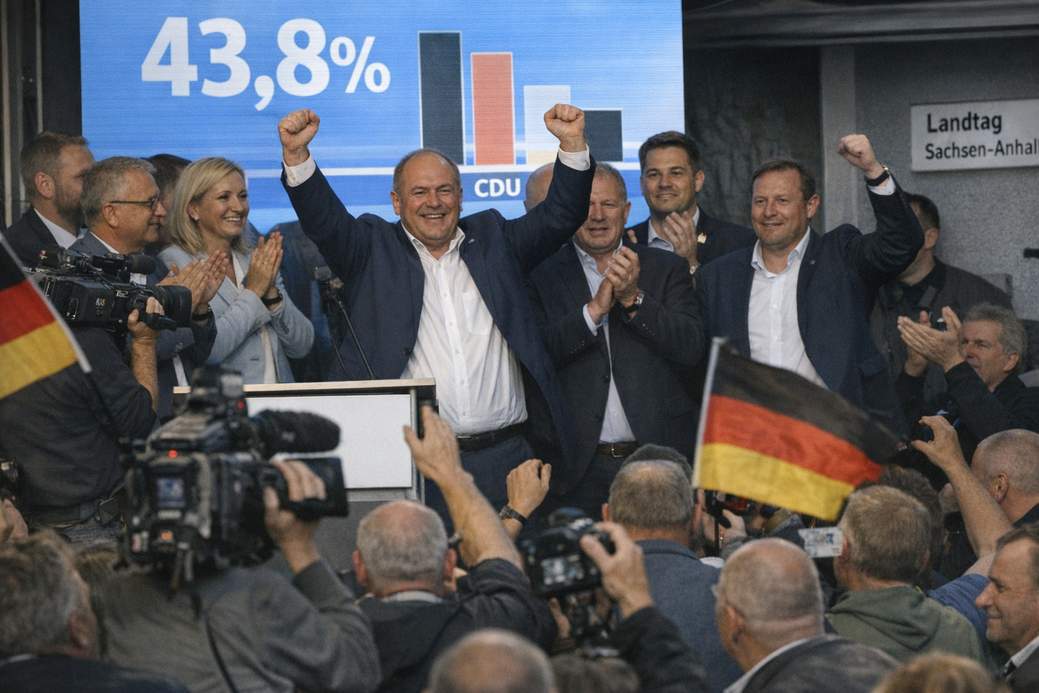
The far-right Alternative for Germany (AfD) stormed the regional election in Saxony-Anhalt and walked away with the largest share of votes — but not quite enough to run the state by itself. They ended up with 43.8% of the vote and 39 seats in an 83-seat parliament, falling just three seats short of an outright majority. So yes, a clear victory — but no solo governorship moment.
Why this feels like a big deal
If AfD had cleared the finish line, it would have become the first far-right party to lead a German state government since World War II — a symbolic shift that alarms a lot of people. Modern Germany has so far avoided giving a far-right or hard-right populist party control of a major government, so this result still feels like a major political tremor even without full control.
The raw math (numbers you can brag about at parties)
Turnout was unusually high at 77.8%, and AfD’s support more than doubled compared with five years ago. The party won 43.8% and 39 seats. The Christian Democratic Union (CDU) — the party of Chancellor Friedrich Merz at the national level — crashed to about 17.2% and picked up 15 seats. The Social Democrats (SPD) got roughly 9.3%, the Greens about 8.9%, and The Left 8.6%, with those smaller parties each ending up with eight seats. The newcomer-ish BSW took around 5.3% and five seats. Bottom line: AfD is way out front, the rest are trying to figure out how to make a government without them.
Coalition puzzle: the firewall and the awkward alliances
Mainstream parties have largely refused to work with AfD — that “firewall” stance is supposed to keep them out of government. But with AfD so dominant, putting together a stable alternative becomes a messy math problem. Any anti-AfD coalition would likely need some creative arrangements or tacit support across uncomfortable ideological lines, and that’s easier said than done. The CDU has publicly ruled out cooperating with AfD, which narrows options even further.
What AfD says it would do — spoiler: it’s controversial
The Saxony-Anhalt AfD branch has a checklist of hot-button policies they want to pursue: a tough deportation push often described as “remigration,” loosening rules to allow homeschooling, banning schools from flying the rainbow flag while encouraging the national flag, and even pushing to pull the state away from the regional public broadcaster. They also campaign against sending taxpayer money abroad to Ukraine and favor easing ties with Russia — though many of those topics are outside the real reach of a single state government.
Extremism tag and scandals
Intelligence services have labeled the regional AfD branch as extremist, pointing to anti-immigrant rhetoric and other worrying signs. There have also been legal headaches: party figures have faced convictions or appeals related to Nazi-era slogans. AfD rejects these labels, saying the accusations are politically driven, but the concerns helped fuel the national debate about how to respond to their surge.
Who’s cheering and who’s sweating
AfD leaders hailed the election as a major win and sent out handshakes toward voters they hope to lure from other parties. The CDU is licking its wounds after losing dominance in a state it ran for decades, and national party figures have been quick to stress they won’t change their no-cooperation stance. Other parties are left scrambling to decide whether they can form some kind of coalition or minority arrangement — a tricky balancing act that could leave the state in political limbo for a while.
Bottom line
Saxony-Anhalt’s vote is a big momentum boost for AfD and an uncomfortable wake-up call for Germany’s center-right. The party’s huge jump reshapes regional politics and raises tough questions about coalitions, governing responsibilities, and how mainstream parties respond. It’s a seismic result, but not quite a coronation — yet.