The quick version
The MTA has a plan to loosen up some of the subway system’s worst choke points. They flagged 70 trouble spots across the network and picked about 25 as the best places to start. If you ride the subway, this is the part where you nod, sigh, and then—maybe—hope for fewer mysterious delays someday.
The Nostrand Junction swap (aka the track switcheroo)
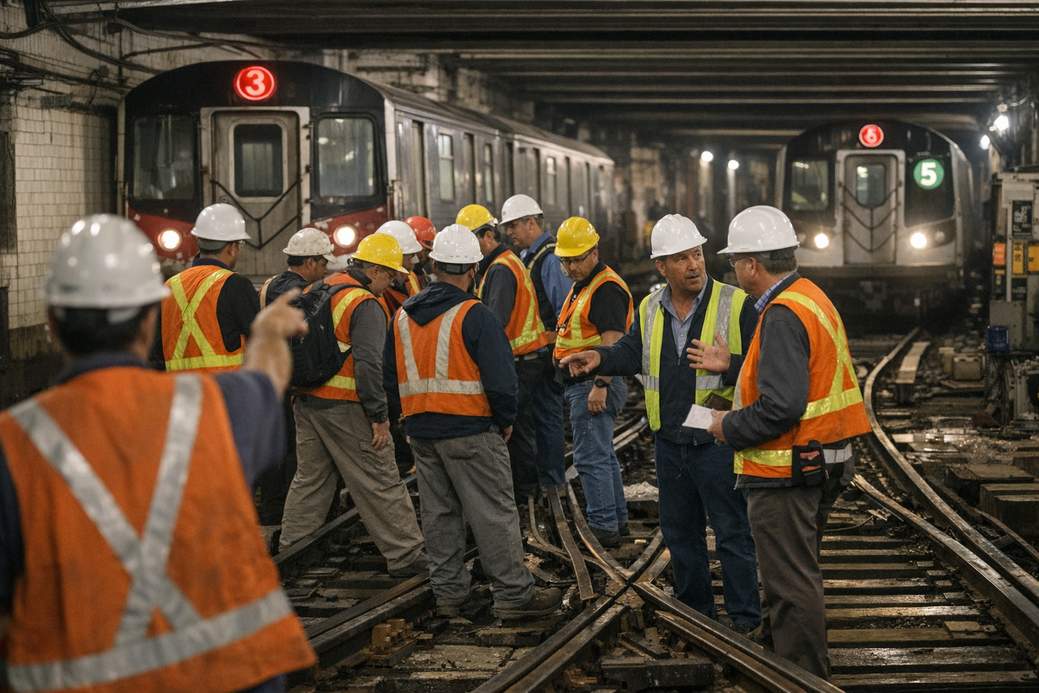
One big fix is a track swap east of Franklin Avenue in Brooklyn to untangle the Nostrand Junction. Right now trains get stuck waiting for each other like polite but indecisive drivers at a four-way stop. The plan is to build new switches and an extra bit of track so the 3 and 5 trains stop tripping over each other: after the work, 3 trains would run along Nostrand Avenue and 5 trains would take the Eastern Parkway route.
DeKalb Interlocking: old tech, big bottleneck
Another headache is the DeKalb Interlocking near the Manhattan Bridge foot, where the B, D, N, Q and R lines all crisscross. The switches there are basically vintage 1930s gear and crews sometimes consult paper maps when things go sideways. The MTA is upgrading signals on the B and D lines and exploring redesigns to smooth out sharp curves so trains can glide through faster instead of tiptoeing.
Seventy trouble spots, twenty-five top targets
The report isn’t just about Brooklyn. It lists 70 locations where fixed infrastructure—tracks, switches, weird layout choices—gets in the way of reliable service. About 25 of those are seen as the most promising short-term wins. In plain English: there are a lot of knots in the system, and the agency has highlighted where it might be easiest to untie them first.
Other places on the hit list
Examples include the 149th Street–Grand Concourse area in the Bronx, where the 2, 4 and 5 lines intersect, and the signal gear at 59th Street–Columbus Circle, which impacts the A, B, C and D lines. These are the spots that create ripple effects—mess with one, and a lot of trains slow down.
Why the subway is so tangled
Part of the problem is historical: the system was built over a century ago by three different companies and later stitched into one network. Some lines shrink from four tracks to two when they cross the East River, which made sense back then but not when today’s rush-hour crush shows up. In short, the infrastructure was out-planned for modern demand.
What the MTA says and what comes next
The agency calls this the first systemwide plan to tackle bottlenecks. Next steps are practical: they’ll study costs and feasibility for each site, then prioritize. Some projects might make it into the MTA’s next five-year capital plan, which starts in 2030—so don’t expect instant miracles, but do expect planning to finally match the complaints.
Bottom line for riders
This is a slow-but-real effort to make rides smoother and less drama-filled. You’ll still have slow days, but the idea is fewer of the old, design-driven delays—less waiting for trains to take turns, and more trains actually moving. Fingers crossed the subway learns to untangle itself like an adult someday soon.