The skinny in one sentence
Dr. Jay Bhattacharya, the NIH director who also spent time as acting CDC chief, says parents should get their kids the usual childhood shots — measles included — and not panic about school. He’s trying to balance public health advice with a reminder that kids need classrooms, not quarantine couches.
Why he’s pushing vaccines (and saying he did the same)
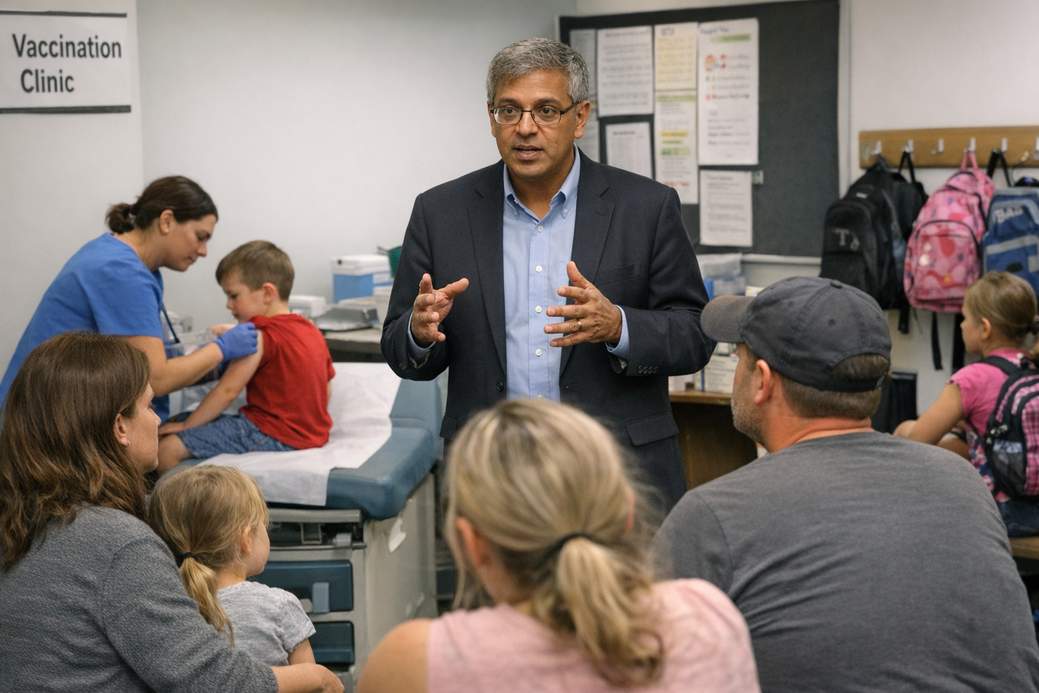
Bhattacharya has been straightforward: vaccinating children for measles and other routine illnesses is important, and he says he’s done it for his own kids. He frames vaccines as the practical, proven way to shield children from preventable diseases rather than treating them like some scary mystery.
Schools, fear, and the post‑pandemic mood
He also warns against scaring parents into keeping kids home. In his view, the COVID-era panic damaged trust in public health, and overhyping risks about unvaccinated classmates only makes matters worse. Bottom line: protect your child with vaccines, but don’t let fear make school-time a forbidden fruit.
Where measles stands right now
Measles cases are up — at levels not seen in decades — and public health officials say coverage needs to be very high (around the 95% mark) to stop community spread. Recently, only about ten states reached that benchmark for incoming kindergarteners during the 2024–2025 school year, so there’s room for improvement in many places.
Outbreaks and responses
Bhattacharya pointed to several state outbreaks that have been tamped down — examples include local flare-ups in Texas, Arizona, Utah, South Carolina, Virginia and Pennsylvania — and credited targeted vaccination efforts with helping control them. He says focusing on affected communities matters, while still reminding families of the broader message: get kids vaccinated.
Autism, politics, and science
With the White House reportedly working on an executive order related to vaccines and autism, Bhattacharya emphasized that science on autism’s rise is complicated and doesn’t have a neat, single answer yet. He warned that conflating the science with politics can scare researchers away from investigating tough questions — and that doesn’t help anyone.
About Robert F. Kennedy Jr. and the vaccine controversy
The conversation comes as HHS Secretary Robert F. Kennedy Jr. — who’s been a controversial, longtime critic of vaccines — remains a polarizing figure because of his past promotion of a link between vaccines and autism, a claim public health experts have repeatedly debunked.
The takeaway (short and practical)
If you want the no-nonsense summary: routine childhood vaccinations help protect kids, schools are important for children’s lives, and scaring parents is counterproductive. Bhattacharya’s message blends encouragement to vaccinate with a plea for calmer, less politicized public health talk.