Quick snapshot
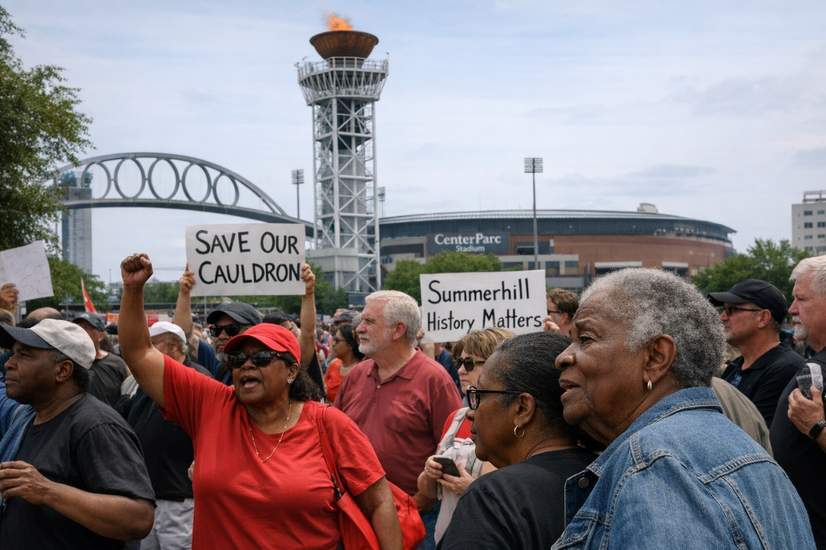
Atlanta’s Olympic cauldron — the top bit of the Flame Tower — is on the move, or at least someone wants it to be. Georgia State and Olympic organizers are proposing to relocate the cauldron from its current spot near Center Parc Stadium in Summerhill to Centennial Olympic Park. That proposal has prompted local residents and community leaders to push back hard.
What’s actually being proposed?
The plan would remove the cauldron itself but leave the tower and the Olympic rings bridge where they are. University and Olympic officials say the change is meant to preserve and highlight Atlanta’s Olympic history, but their explanation hasn’t calmed nerves in Summerhill.
Neighbors showed up — loudly
Dozens of Summerhill residents gathered to protest the idea, arguing the cauldron is more than sports nostalgia. For many, it’s a piece of neighborhood identity — a landmark tied to real people and real memories, not just a trophy for tourists.
A personal story: why this matters to one family
For Sheryl Calhoun, the debate isn’t abstract. Her mother, Mattie Ansley Jackson, spent decades fighting for neighbors on issues like housing, jobs and community programs. Jackson even carried the Olympic torch in 1996 and loved that the cauldron stood in her neighborhood. Losing the cauldron, her daughter says, would feel like losing a chunk of her mother’s legacy.
Jackson passed away in 2020 at 98. The house where she lived is now a construction lot, and that history makes the cauldron’s future feel especially raw for longtime residents.
It’s not just about the object — it’s about how the decision was made
Community leaders aren’t only upset about moving the structure. They’re annoyed about being sidelined. Residents say Georgia State phoned a few stakeholders and essentially announced the plan instead of doing a real consultation. That kind of top-down approach reopened old wounds from past development disputes.
Why people see the cauldron as part of Summerhill’s story
To many in the neighborhood, the cauldron isn’t a mere relic of 1996; it’s woven into the area’s culture and memory. Folks describe it as a symbol that ties Olympic history to Summerhill’s own community narrative — something that showed up during a major moment in the city’s history and stayed.
What the university says
Georgia State released a written statement saying the move would preserve Atlanta’s Olympic legacy while keeping ties to Summerhill. The university declined to do an on-camera interview and pointed reporters to that statement.
Bottom line
This fight is equal parts nostalgia, legacy and who gets a seat at the table when big changes are on the docket. For residents like Calhoun, it’s also painfully personal: shifting the cauldron feels like another erasure in a neighborhood that’s already weathered a lot of change. The project might be billed as heritage preservation, but for some locals it reads like history being rearranged without them.