Quick recap
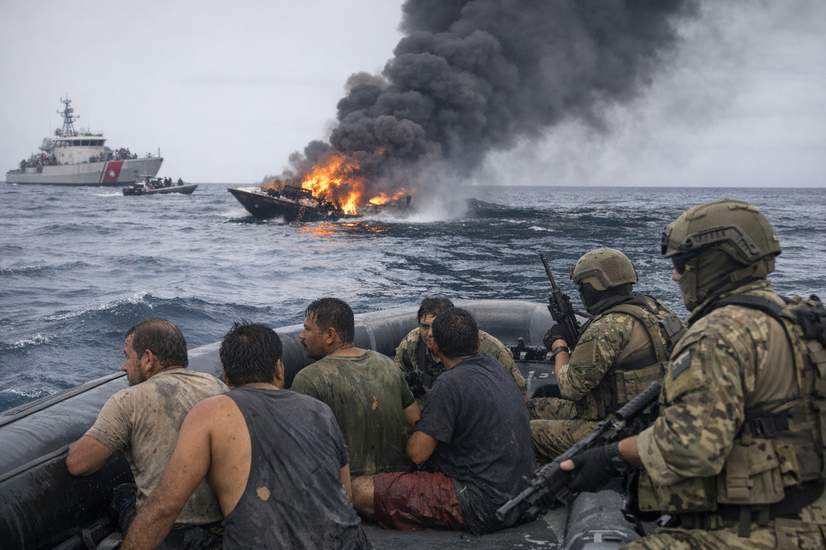
The U.S. military struck a boat in the eastern Pacific, killing two people and leaving six survivors. Military officials say the vessel was suspected of drug smuggling along established trafficking routes. This incident is one of more than 60 similar boat strikes since early September, and brings reported strike-related deaths to over 210 people.
What we know about the incident
Authorities say the strike happened on Sunday and that six people survived. It isn’t clear from public statements whether those survivors were rescued. The U.S. Southern Command (SOUTHCOM) said it notified the U.S. Coast Guard; beyond that, the Pentagon hasn’t provided many details.
Evidence and the video clip
A grainy black-and-white clip shared on social media shows a fast-moving boat getting hit by what appears to be a projectile, then catching fire. SOUTHCOM has said it was targeting traffickers on familiar smuggling corridors, but the military has not publicly posted proof that the vessel actually carried drugs.
The political backdrop
President Donald Trump has described the situation as an “armed conflict” with Latin American cartels and framed the boat strikes as an escalation meant to reduce the flow of drugs — especially fentanyl — into the U.S. That narrative has been used to justify the attacks, but the administration has released limited evidence to back claims that those killed were “narcoterrorists.”
Questions about legality and effectiveness
Critics have raised alarms about both the legal basis and the practical impact of the strikes. Some experts point out that a lot of the fentanyl fueling overdose deaths in the U.S. is trafficked over land from Mexico, not necessarily via boats from the open ocean. Lawmakers have also demanded unedited video from earlier strikes and questioned whether follow-up strikes on survivors crossed legal or ethical lines.
Oversight and investigations
The Pentagon’s inspector general has said it will review whether the military followed established targeting procedures — specifically the six-phase Joint Targeting Cycle — when carrying out these strikes. That review is focused on process rather than on deciding whether the strikes themselves were lawful.
Bottom line
More strikes, more deaths, and more unanswered questions. Officials say they’re targeting traffickers; critics want proof and clarity. Meanwhile, survivors, lawmakers, and watchdogs are all pushing for transparency. The tense mix of national-security rhetoric, messy evidence, and potential legal concerns means this story is likely to stick around the headlines for a while.