100 years of reinvention (plus a tower with stories)
Believe it or not, that hulking brick building you spot on Ponce de Leon has been playing musical chairs with Atlanta for a century. Opened in 1926, it started life as a massive Sears store and distribution hub, later hosted parts of city government, sat quiet for a while like a sleeping giant — and then got a second (and very stylish) life as Ponce City Market.
Why Sears picked this spot (hint: trains and trolleys)
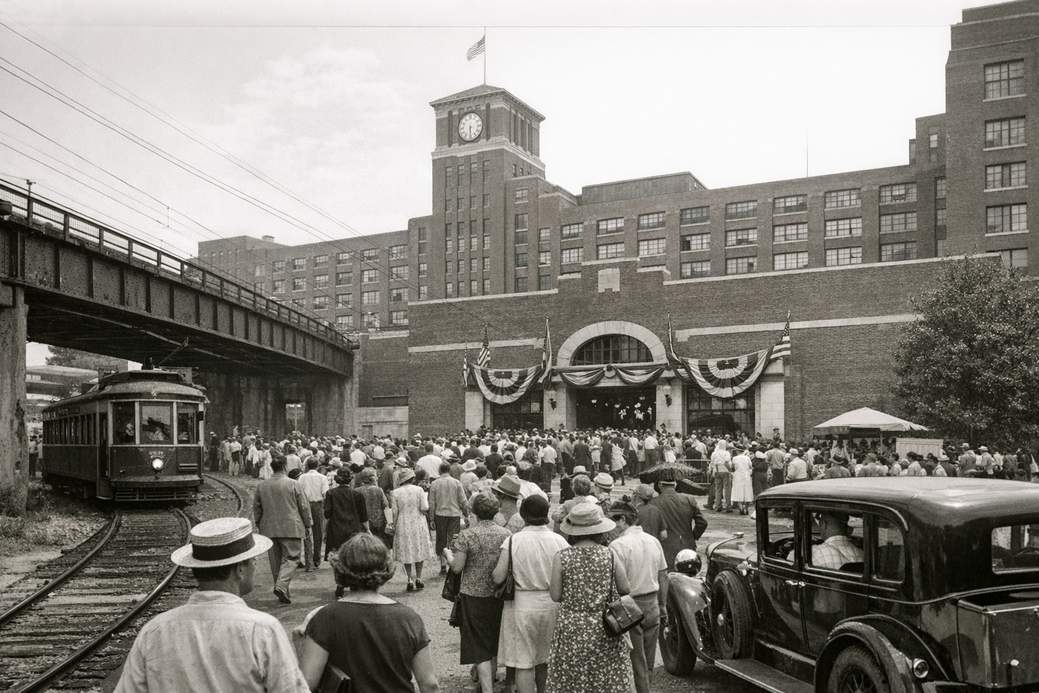
Back in the Roaring Twenties, Sears was moving beyond catalogs and needed places that combined storefronts with huge distribution operations. The lot where Ponce sits was perfect: it was on the city edge, had room to expand, ample parking for the young-car-owning public, and access to transit. A trolley ran along Ponce de Leon and crossed the rail corridor that today’s Beltline follows — basically the 1920s version of perfect logistics planning.
Opening day and the building that did more than sell stuff
When the Sears complex threw open its doors in August 1926, reportedly tens of thousands wandered in. But it wasn’t just a place to buy goods — Sears used the site for outreach, supported regional agriculture, and even ran a farmers market starting in 1929 that brought growers straight into the city. The place hummed with commerce and community in equal measure.
Radio waves, popcorn schematics, and other delightful leftovers
The building’s tower once beamed radio programs — weather updates, farming tips and tunes that helped popularize early country music. Later, when the space sat mostly unused, renovation teams found artifacts everywhere: from wiring diagrams for an old popcorn maker to other forgotten relics. It was less demolition and more archaeological dig with very different rewards.
From boom to quiet to City Hall East
As mid-century shopping habits changed (hello suburban malls), Sears’s big-city distribution model faded. The building eventually became City Hall East, but the city never put the whole complex to full use. Large sections basically froze in time, preserving snapshots of earlier decades.
The Jamestown makeover: reconnecting neighborhoods with retail, food and fun
Developers saw an opportunity: restore the old bones, stitch together adjacent neighborhoods, and give the building a new life as a communal spot. Ponce City Market reopened in phases, with the first wave arriving in 2014. The complex now mixes shops, restaurants, offices and housing — the original residential build included around 259 units — and has become a magnet for locals and visitors alike.
A modern twist on old rail lines
There’s a neat symmetry here: the rail corridor that made Sears’s operation sensible a century ago now carries the Beltline past the Market. What used to be the building’s logistical lifeline is now a recreational artery bringing people to its doorstep — full circle, with better snacks.
Centennial celebrations and remembering what came before
To mark 100 years, the Market has posted historic photos around the food hall and hosted a photographer to document the building’s neglected-but-honest prior state. The centennial events include free activities, music and programming — basically a monthlong block party with a history lesson on the side.
Why this matters
Beyond being a cool place to eat and shop, the building’s survival is a win for preservation. Atlanta hasn’t always been famous for saving its past, but the Market’s comeback shows the city can honor history while giving it new purpose. And honestly, where else can you get brunch in a former Sears warehouse that’s also a century-old storybook?