The spark that started it all
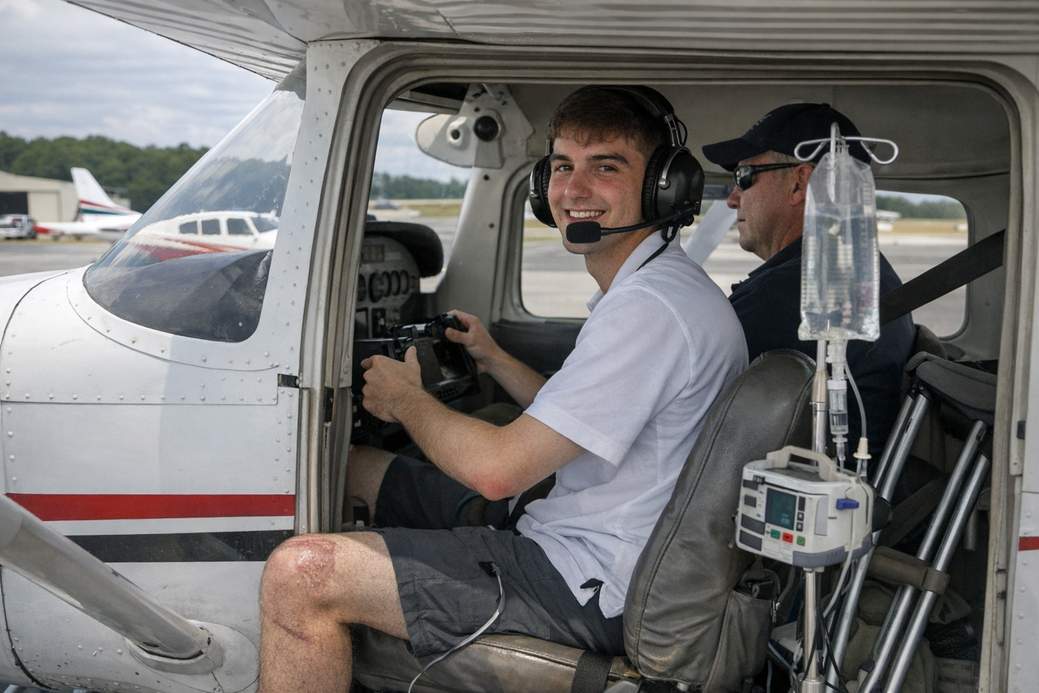
Nico Leonardo grew up with his head in the clouds—literally. His grandfather was a pilot who did aerobatics and air shows, and young Nico decided early on that pilots were the coolest people alive. Fast-forward: he graduated from Pope High School and set his sights on a career above the skyline.
A detour nobody expected
Last September, Nico hit some serious turbulence on the ground. What everyone thought was a routine muscle injury turned out to be Ewing sarcoma, a rare bone cancer. It was a gut punch, but it didn’t end his story—just rewrote the flight plan for a while.
Treatment: long taxi, then takeoff again
Nico’s treatment was intense: 14 rounds of chemotherapy and surgery to remove the tumor from his leg. That meant frequent hospital stays—roughly every other week for about nine months—and, for many patients, a mix of surgery and radiation. He lost energy, had days he couldn’t walk, and learned first-hand how exhausting being brave can be.
Keeping his eyes on the horizon
Through it all, Nico stayed stubbornly optimistic. He kept up flying lessons when he could, leaning on an instructor and a lot of grit. On May 11 he rang the end-of-treatment bell—a small victory with enormous meaning. He says the hard times made the good ones feel even bigger and taught him to appreciate the little stuff.
Why rare cancers are tricky
Ewing sarcoma is uncommon—about 200 new cases a year in the U.S., roughly 1% of pediatric cancers—which makes drug development hard to justify for big pharmaceutical companies. Treatment still relies on a handful of chemotherapy drugs; some are decades old. That’s frustrating for doctors and families, but it’s also why comprehensive pediatric cancer centers keep pushing forward in research and supportive care every day.
More than medicine: the team that helps
At the Aflac Cancer and Blood Disorders Center, care goes beyond chemo and surgery. The center treats hundreds of new cancer patients and thousands of sickle cell patients annually, and offers practical supports like child life specialists, school teachers, family therapy and music therapy to make hospital life less scary and more normal for kids and families.
Next steps: back to the cockpit
Now healed and full of gratitude, Nico is back on the runway—figuratively and literally—continuing his studies at Auburn and working toward his pilot dream. His journey is a reminder that setbacks can change your path without stealing your destination. Put another way: the plane dipped, but the pilot never bailed.