Once upon a meadow
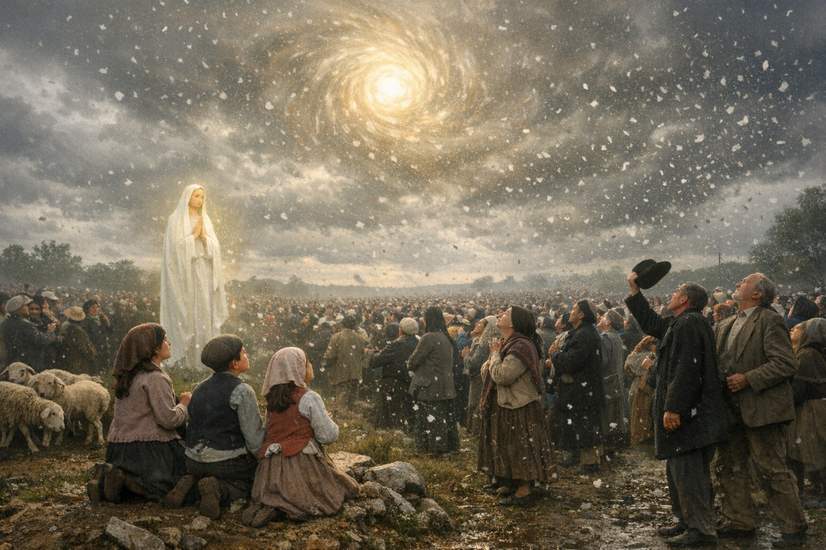
In May 1917, three cousins playing in a Portuguese field said they bumped into something extraordinary: a bright figure they identified as the Virgin Mary. Kids, sheep and a very dramatic sky — the perfect setup for a legend. They were told to return on the 13th of each month for a few visits, and what followed turned a quiet village into a global curiosity.
The spectacle people still talk about
The biggest headline from those months wasn’t just the sightings — it was what many witnesses called the “Miracle of the Sun.” Thousands had gathered by October and reported a weird, dazzling show in the sky: colors, swirling motion, and for some it felt like a blizzard of petals. Eyewitness accounts varied wildly — from spiritual awe to sensations of fear — and whether it was a miracle, a mass illusion, or a trick of the weather remains debated. But whatever it was, it left a lot of people convinced and a lot of others scratching their heads.
The three messages — and the secret one
The children said they were given three private revelations. Two were talked about publicly, but the third was written down and locked away in the Vatican for decades. That secrecy only made fans more curious, and rumor mills go into overdrive. People imagined everything from apocalyptic warnings to geopolitical spoilers — the more mysterious, the better for conspiracy storytellers.
How prayer turned political
One of the messages was later interpreted as a plea to pray for Russia’s conversion, and that interpretation gave the Fátima story an unexpected political twist. As the 20th century moved into Cold War territory, the shrine became a rallying point for anti-communist believers. A spiritual apparition had morphed into something with geopolitical resonance — fans of the shrine said prayers might change history, skeptics called it theological opportunism.
The pope, a bullet, and a literal crowd-pleaser
Pope John Paul II’s relationship with the Fátima story amplified the shrine’s profile. He survived a near-fatal shooting on a May 13 anniversary and later credited the Fátima devotion with his recovery — which, unsurprisingly, electrified Fátima supporters. The pope’s attention turned the site into a touchstone for Catholics wary of communism, and the shrine’s reputation ballooned even further.
The sealed letter and the big reveal
The so-called third secret sat in a sealed envelope for decades and inspired dramatic gestures: hunger strikes, protest stunts, even hijacking attempts by people desperate to force its disclosure. When the Vatican finally published its contents around 2000, many were underwhelmed. The official explanation linked the vision to the 1981 attempt on the pope’s life rather than to some sweeping prophecy of doom, which left some believers disappointed and some critics satisfied.
Skeptics, supporters, and the historical messiness
Historians and religious scholars point out that the story changed over time. Early accounts were more modest; later retellings leaned into political themes. That said, it’s hard to deny that the apparitions had cultural power — the Church used Fátima as part of its post-war stance against communism, and that stance was one of many pressures shaping the late 20th-century political landscape.
Why it still matters
Fátima didn’t disappear when the Cold War ended. Pilgrims still stream to the shrine, ceremonies still draw huge crowds, and the narrative lives on — partly as faith, partly as folklore, partly as political symbolism. When one of the visionaries died, the nation paused; people still mark the anniversaries. Love it, doubt it, or roll your eyes at it — the Fátima story is a reminder that a handful of kids, a dramatic sky, and a vault full of mystery can ripple through history in unexpected ways.