One hundred years since her birth, the final pictures Marilyn Monroe sat for still have the power to surprise. They aren’t the slick, staged celebrity portraits you might expect — they feel loose, slightly homespun and oddly joyful, like a private memory accidentally made public.
A summer day on the beach
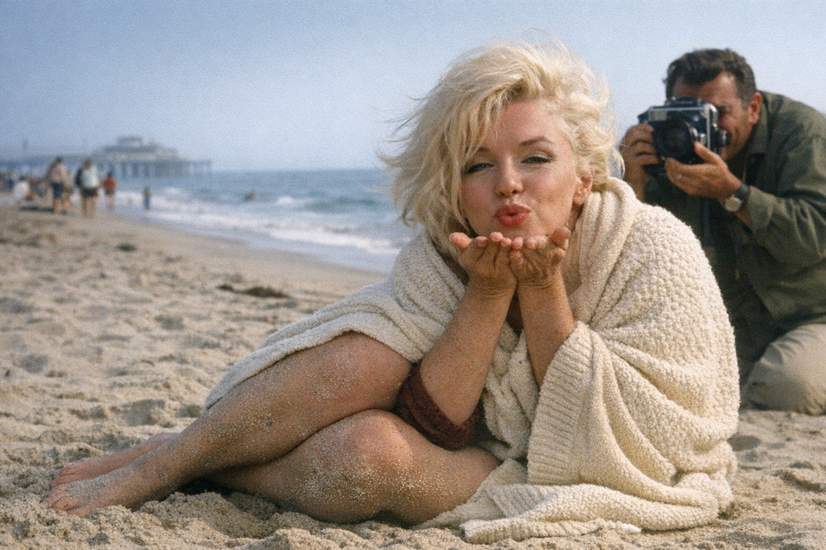
In July 1962 Marilyn was photographed on Santa Monica beach by George Barris. She wanders the sand in towels and knitwear, hair mussed by the breeze, laughing and making small, playful faces at the camera. In the last frame from that session she’s curled up in the sand, hands together, sending what looks very much like a blown kiss to whoever’s behind the lens.
Behind the smile
That ease in the photos sits against a tougher reality. By then Marilyn’s life was messy: a recent divorce, health problems, insomnia and prescription-medication issues, and a reputation for being “difficult” on set that often came down to people misunderstanding real struggles. She’d just lost a job on a studio picture and was battling tabloid chatter — and she was trying, in her own way, to turn the narrative back around.
Photos as a lifeline
Magazines had become one of Marilyn’s tools for shaping how she was seen. She took carefully staged, glossy interviews and shoots to remind the world who she was — and to remind herself. For Marilyn, sessions like the Santa Monica shoot were often part self-promotion, part therapy: a chance to be visible on her terms and to play with the idea of herself in front of the camera.
How the Santa Monica session stands out
Barris’s beach portraits feel less about glamour and more about personality. Unlike some photographers who zeroed in on Marilyn’s sex symbol image, Barris captured a softer, more spontaneous side: someone relaxed, playful and very much alive in the moment. Outtakes show her running toward the waves, twirling and laughing — small scenes that feel intimate and unpolished.
The aftermath
Those images became famously poignant after Marilyn’s death in early August 1962. Plans to publish them shifted, and the photos later found their way into newspapers and magazines overseas. Artists and pop-culture figures referenced the pictures, and they rippled into later works of art and commentary about her life.
She edited herself
One important detail: Marilyn often helped choose which shots lived and which didn’t. She marked prints with a hairpin and labeled the ones she liked, exercising a kind of control many say she didn’t have elsewhere. That small act of editing — crossing out some images, praising others — has been read in many ways, but to those who worked with her it was a clear insistence on having a say in how she was shown.
George Barris and the long view
Barris kept returning to these photographs over the decades. He later compiled books and collections that presented the Santa Monica shoot as a sincere, unguarded portrait of Marilyn — not some manufactured fantasy, but a person with freckles, warmth and a sense of play. For many viewers today, these pictures are tender and timeless, their tones warmed by age and memory.
Where to see them
The National Portrait Gallery in London marked Marilyn’s centenary with an exhibition that includes selections from that final summer — among other iconic and surprising portraits from her life. Seeing the Santa Monica images in a gallery setting highlights how they both close a chapter and remind us how vivid she still feels: a bright, complicated figure caught laughing on the shoreline.
Marilyn’s life folded together glamour and real human messiness, and these last photos manage to be both playful and heartbreaking at once — like a private postcard to the world that kept arriving long after she was gone.