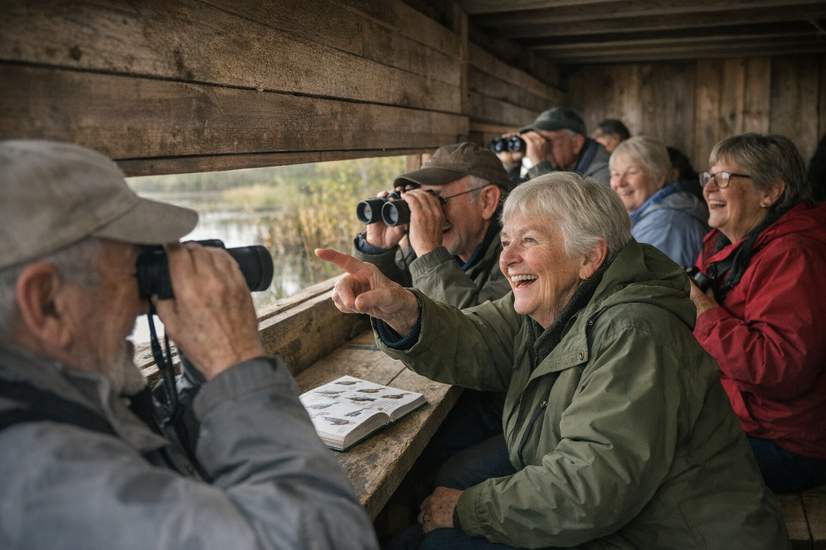
A tiny wooden hide, big human moments
Picture a bunch of older folks crouched in a rickety wooden hide, binoculars at the ready, giggling like excited kids whenever someone spots a feathered celebrity. That scene isn’t just wholesome TV fodder — for many with memory problems, it’s a startlingly effective mood and memory booster. People who struggle to remember yesterday’s lunch can suddenly recall the flash of a robin or grin at ducks doing their splashy thing. It’s like the birds hand out tiny, avian-shaped mood-lifts.
Brains that do bird yoga
Scientists have been peeking into what’s happening in the noggins of keen birdwatchers. Turns out, people who get good at identifying birds show different brain wiring in areas that handle attention, seeing, and recognising stuff. The more someone practices spotting species, the more their brain seems to reorganise itself — a fancy process called neuroplasticity. In plain English: the brain stretches, rearranges, and gets better at bird-related tasks, and that extra organisation appears to stick around as we age.
Not just experts—enthusiasm matters
You don’t need to be a bird nerd with a pocket field guide to reap the benefits. Studies show that being genuinely into birdwatching — even casually, or from a window — is linked to feeling calmer, more connected, and mentally sharper. Enthusiasm can beat expertise when it comes to feeling restored and present. So yes, backyard bird fans, you’re doing it right.
Bird therapy: feeders, stuffed owls and real smiles
People have turned feather-spotting into actual therapy programs in care homes and rehab settings. Simple things like putting feeders outside a communal lounge can make residents more alert, engaged, and easier to chat with. Staff report seeing smiles where there hadn’t been any for weeks. Other programs give participants plush birds with recorded calls, or guided spotting sessions, and report improvements in mood, memory cues and social interaction. Even stroke survivors working on speech have found bird-focused activities helpful.
Why birds work their magic
It’s not just that birds are cute (though they are). Birdwatching combines several brain-friendly ingredients at once: fresh curiosity, gentle attention, small social moments and emotional hits of joy. That combo stimulates chemicals like dopamine and norepinephrine, which help attention and may reduce inflammation in the brain. In short: curiosity plus nature equals tiny brain upgrades.
Big wins from tiny, low-cost changes
Because birdwatching is cheap and accessible — a feeder and a comfy chair can be all you need — institutions have started adopting it widely. Some insurers even paid to install feeders in dozens or hundreds of care homes after seeing clear benefits. That’s right: a bag of seeds and a window can save smiles and money.
How to get started (no binoculars required)
If you want to try this at home or with a loved one, keep it simple: set up a feeder near a window, put out a seat and a warm drink, and let curiosity do the heavy lifting. Point out a cheeky sparrow or a dramatic gull, try to name one new bird each week, or play a birdcall and wait to see who perks up. The goal isn’t mastery — it’s moments of presence, surprise and connection.
Final thought
Birdwatching is one of those rare hobbies that’s gentle, social, goofy and scientifically promising. Whether you’re in a hide in the countryside or peering out your kitchen window, watching birds can brighten the day and give the brain a little workout. So dust off whatever binoculars you own, or just press your face to the glass — the birds will do the rest.