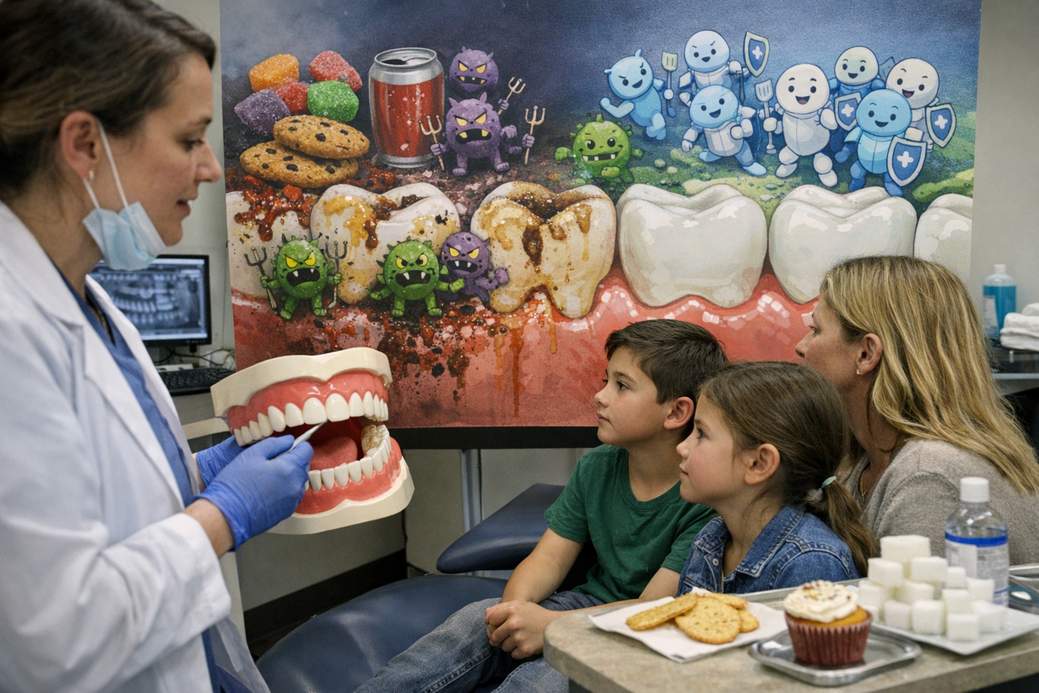
Your mouth is a tiny, chaotic city of microbes — some are troublemakers and some are like custodians keeping everything in order. Treat the good ones well and they’ll help keep your teeth, gums and even parts of your overall health happier. Treat them badly, and the sugar-loving riffraff will throw a rave on your enamel.
What’s living in your mouth?
The oral microbiome is a diverse gang of bacteria, fungi and viruses that each like different real estate: the tongue, the cheek, tooth surfaces, or the sulky space between your teeth and gums. Some species make acid from sugars and drill away at enamel; others quietly stop those bullies from settling in.
When the balance tips toward the wrong microbes, you can get cavities and gum disease — and researchers have found links between poor oral microbial balance and wider health issues like heart conditions, diabetes and some cancers. So yeah, your mouth matters beyond fresh breath.
Avoid the obvious (and the sneaky) villains
Sugary drinks and candies are the obvious enemies — they feed acid-producing bacteria. But don’t forget about refined carbs: white bread, crackers, cakes and pretzels break down quickly into sugar in your mouth and fuel the same troublemakers. The more often you snack on fermentable carbs, the more you tip the scales toward the acid-loving crew.
Leafy greens and the nitrate party
Greens like spinach, kale and beetroot might sound like boring salad fodder, but they’re full of nitrates that friendly mouth bacteria happily convert into nitrites. Those eventually turn into compounds that can help relax blood vessels and support heart health — plus they help the beneficial microbes thrive. Chew your greens like you mean it.
Polyphenols: tea, berries and the plant squad
Polyphenols are plant chemicals that defend plants and quietly annoy bad bacteria. Tea, dark berries, cranberry juice and even honey carry polyphenols that can interfere with the stickiness of plaque and curb cavity-causing microbes. So sipping tea and snacking on berries isn’t just classy — it’s tactical.
Garlic, cheese and fermented friends
Garlic contains allicin, which can antagonize some of the nastier oral microbes (even if it fights your chances of being kissed that night). Cheese is a surprisingly helpful chew: it boosts saliva, buffers acids and can shift the mouth community toward less sugar-loving species. Fermented foods like kefir bring beneficial microbes that compete with the bad actors and may reduce biofilm formation.
The big picture: patterns beat single foods
No single miracle food will save your gums. What really matters is your overall eating pattern. Diets richer in whole plant foods, fiber and complex carbs and lower in frequent refined-sugar snacks tend to support a more balanced oral ecosystem. Studies have even shown links between Mediterranean-style eating and less severe gum disease.
Some research suggests frequent red meat consumption may be associated with worse gum health, but the reasons aren’t fully nailed down. The takeaway: focus on variety and whole foods rather than searching for one perfect snack.
Don’t ditch brushing and flossing
Food choices are powerful, but they’re not a replacement for brushing and flossing. Mechanical cleaning reduces microbial buildup and helps keep the community in check. Flossing lowers levels of certain pathogens and brushing the tongue and teeth knocks down microbes associated with disease and bad breath.
Be cautious with strong antiseptic mouthwashes: some can unbalance the oral community if used long term. A few short-term, targeted uses are fine, but aim for a balanced approach rather than trying to annihilate every microbe.
Simple, practical moves
Make leafy greens, tea, berries, fermented foods and modest servings of cheese regular parts of your diet. Cut back on sugary drinks and refined snacks. Keep daily brushing and flossing non-negotiable. Do these things and you’ll be feeding the friendly microbes while making life harder for the troublemakers.
So: throw together a leafy salad, nibble on some cheese, sip a hot cup of tea and maybe pass on the midafternoon candy bar. Your mouth’s tiny citizens will thank you — probably in ways you won’t notice right away, but that your teeth, gums and maybe even your heart will appreciate down the road.