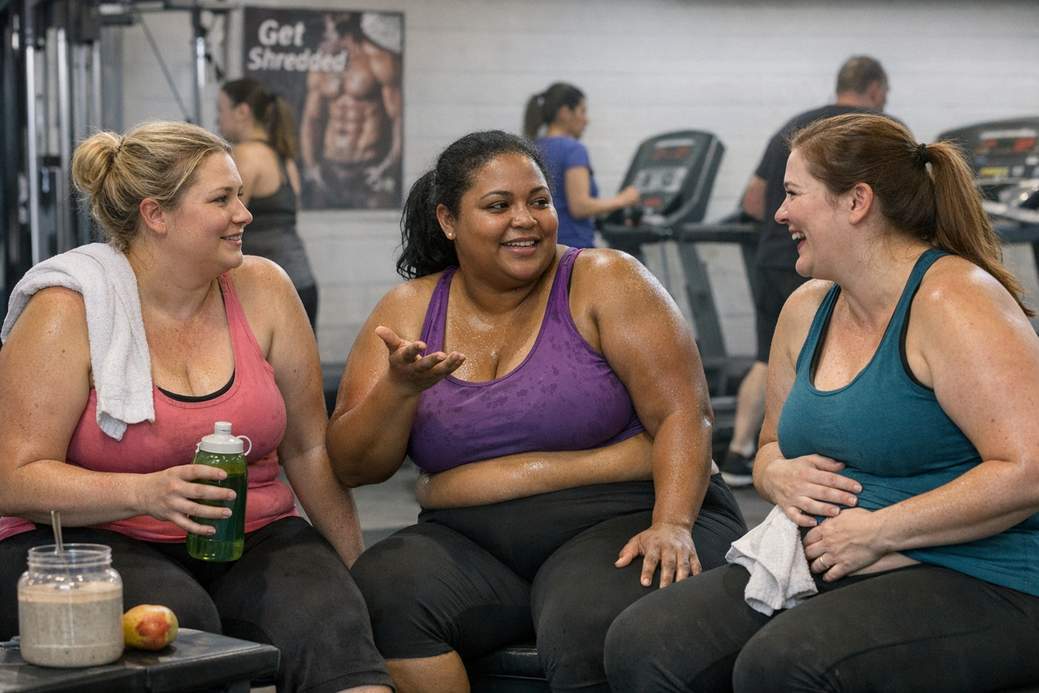
Fat has had a rough PR run: demonised by diet trends, worshipped by some fitness subcultures, and plastered across endless “get shredded” posts. But before you launch into extreme fat-burning mode, take a breath — your body fat does a lot more than sit there and look squishy.
Why fat isn’t the villain
There are two different fat jobs: the stuff in your food (dietary fat) and the stuff your body saves for later (body fat). When you overconsume calories, fat cells tuck away the extras as lipids and expand like tiny storage lockers. But those lockers aren’t passive — fat acts more like an organ than a blob.
Think Goldilocks: too much or too little, and things get messy. The right amount gives you energy reserves, helps coordinate other systems and keeps things running smoothly when life throws curveballs (or when your fridge is empty).
Fat sends messages (yes, it talks)
Fat releases hormones that tell your brain and organs how much energy is available. Leptin is one of the main messengers — when leptin levels are healthy, the brain senses adequate energy and can focus on other priorities like immune defence and reproduction. If leptin falls, the body essentially flips into worry mode, slowing non-essential functions to conserve fuel.
Fat and staying warm
Not all fat is the same. White fat stores energy and offers insulation, while brown and beige fat contain cells that burn fuel to produce heat. Together they help you maintain body temperature when it’s cold or when you’re blasting Netflix in an air-conditioned room.
What happens when you have too little
Starving your body of fat isn’t just about aesthetics — it can trigger serious physiological changes. With very low fat, your body goes into energy-saving mode: immune function can decline, muscle gets broken down for fuel, and bone maintenance slows. That combination increases frailty and fracture risk.
Hormones also take a hit. Extremely lean men may see testosterone and energy levels drop. Women with very low fat — often seen in some athletes or people with eating disorders — can experience disrupted menstrual cycles or stop ovulating entirely. In extreme cases, conditions like anorexia nervosa can cause long-term organ damage or even be fatal.
There’s also something called the ‘‘obesity paradox’’: in some serious illnesses, having extra fat can act as a reserve that improves short-term survival, especially in middle and older age. In other words, a little cushion can help the body weather acute health storms.
How much is enough?
There’s no single magic number — needs vary by person, sex, ethnicity and lifestyle. As a rough guideline, healthy adult men often fall around 10–20% body fat, and healthy adult women around 20–29%. People living with obesity usually have body fat above about 30%.
Athletes tend to be leaner. DEXA scans of competitive athletes have shown minimums around 10% for men and 16% for women in some studies — much higher than the mythic 1–2% some people claim.
Where fat sits matters
Fat location is as important as quantity. Subcutaneous fat lies under the skin and is relatively benign; visceral fat hugs internal organs and releases inflammatory signals that can raise blood pressure and interfere with insulin, increasing the risk of metabolic disease.
Practical ways to measure fat (without overdoing it)
DEXA full-body scans give the most detailed snapshot of fat, muscle and bone, but they’re costly and not always practical. Skinfold calipers can estimate subcutaneous fat where measured, but they don’t see visceral fat and can be inaccurate. Smart scales use a small electrical current to guess body fat but are affected by hydration and can be misleading.
If you want simple, useful checks: try waist-to-height ratio (a healthy range is roughly 0.40–0.49) or waist-to-hip ratio (values above about 0.90 for men and 0.85 for women suggest excess abdominal fat). Remember that BMI can be misleading because it doesn’t distinguish muscle from fat.
Keep it balanced — and keep your sense of humour
As we age, fat tends to increase and muscle and bone can decline, so eat well, lift weights occasionally, and move your body. But don’t obsess over getting your body fat as low as possible — that can backfire biologically and socially. Aim for a healthy, functional amount, not the lowest number your willpower can conjure.
So yes: fat is powerful, useful and — dare we say — a bit beautiful. Treat it with respect, not war.