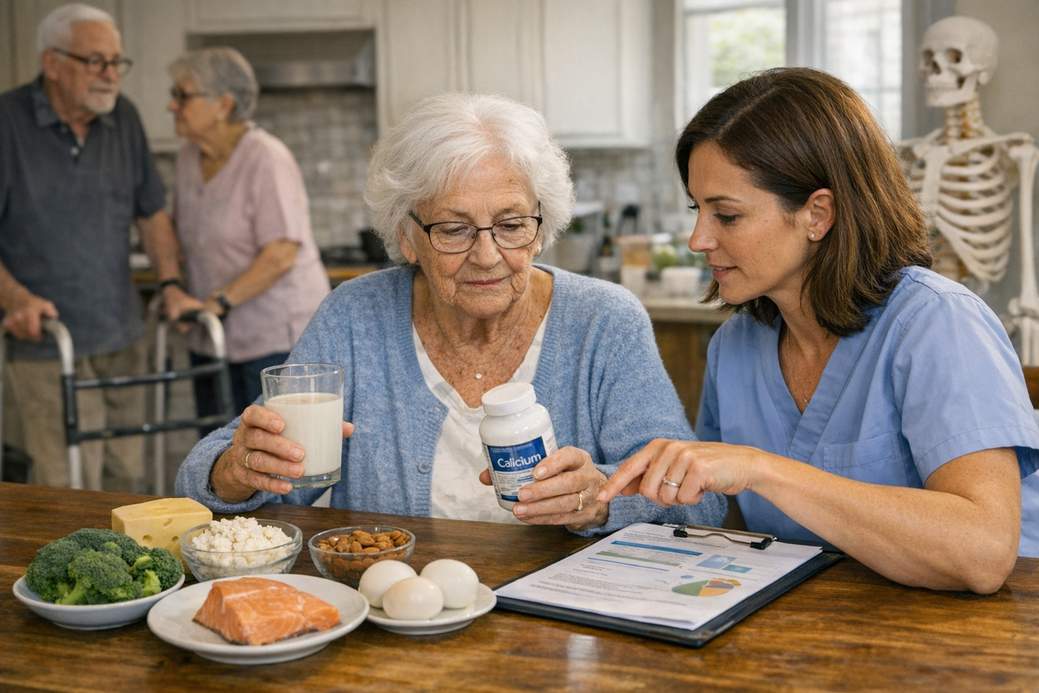
Heads up: your bones start acting like retired librarians earlier than you think — they slow down, get brittle, and complain more often. But before you panic and buy a lifetime supply of milk, breathe. Food and a bit of movement can do a lot to keep your skeleton behaving like it still has a midlife crisis to go through.
Why bones deserve your attention (now, not later)
Your peak bone strength is built when you’re young, and after that the slow downhill begins. Tens of millions of people end up with weak bones later in life — a quietly common problem that often doesn’t announce itself until a bad fracture shows up. Hip breaks are a big deal: they’re common in older adults and can trigger a cascade of health problems. In short, bones are low-key dramatic and worth looking after early.
The main nutrients: calcium, vitamin D, protein — and the gang
The bone dream team includes calcium, vitamin D and protein. But don’t forget the supporting cast: vitamin K, magnesium, phosphorus and zinc all chip in. Together they help bones form, stay dense, and keep muscles working so you don’t faceplant during your next attempt at looking athletic.
Dairy: milk, cheese and yoghurt — old classics for good reasons
Dairy is a quick way to top up calcium and protein. For example, a 200ml glass of milk gives roughly 260mg of calcium. Studies in older care-home residents who upped dairy and protein intake saw fewer falls and far fewer hip breaks over two years — suggesting the combo of calcium plus protein is protective. Recommended daily calcium varies by country and situation: many adults aim for about 700–1,200mg depending on age, sex and risk factors.
Soy and tempeh: plant power with a folkloric boost
If you don’t do dairy, soy foods like tofu and edamame are legit calcium sources — about 100g of tofu can contain roughly 200mg of calcium. Soy also has isoflavones, plant compounds that act a bit like estrogen and may help bone density, especially after menopause. Some studies show small bone benefits from higher-dose soy supplements over a year, and fermented soy like tempeh might help because fermentation reduces compounds that block mineral uptake.
Chia seeds: tiny, trendy, surprisingly useful
One tablespoon of chia packs close to 95mg of calcium plus magnesium and phosphorus. They also bring omega-3s, which calm chronic inflammation — useful because long-term inflammation speeds up bone breakdown. Most evidence from long experiments is still early (including animal studies), but chia are an easy sprinkle-on topping with a respectable nutrient profile.
Dried fruit: prunes, figs and other sweet helpers
Dried fruits like figs and prunes quietly carry calcium and magnesium — two dried figs can add around 100mg of calcium to your snack attack. Prunes have been studied for bone support: a daily handful in some trials slowed bone loss. Fruits also deliver polyphenols, antioxidants that may help keep bone breakdown in check.
Canned fish: yes, the tinned stuff counts
Canned sardines and salmon (with bones) are not just for lazy lunches — a small 60g tin of sardines can supply about 240mg of calcium. These fish bring protein and vitamin D to the party too, which helps your body use the calcium you eat. Strong muscles and sturdy bones are a package deal: keeping muscle mass helps prevent falls and fractures.
Supplements: when to consider them (and when not to)
Supplements are a mixed bag. Vitamin D helps calcium absorption but may not prevent fractures in otherwise healthy people; it can reduce falls in older adults. Too much vitamin D (far above typical daily recommendations) might even increase fall risk, so more isn’t automatically better. Many health authorities suggest supplements for older adults or people who get very little sunlight, and calcium supplements are usually reserved for those who can’t meet needs through food.
Practical, boringly effective habits
If you eat a varied diet with dairy or fortified/plant alternatives, leafy greens, oily fish, nuts and pulses, you’ll cover most bases. Also, do some weight-bearing exercise — walking, dancing, carrying groceries like a determined goat — to keep bone-building signals turned on. If your diet is restricted (vegan, low-dairy, or limited variety), consider fortified foods or targeted supplements after chatting with a clinician or dietitian.
Quick bone-friendly shopping cheatsheet
Calcium: milk, yoghurt, cheese, kale, collard greens, almonds, tinned sardines (with bones). Vitamin D: salmon, mackerel, tuna, egg yolks. Magnesium: spinach, okra, potatoes, sweet potatoes, raisins. Vitamin K: prunes, spinach, brussels sprouts, kale. Potassium: papaya, oranges, bananas, plantains, tomatoes.
Bottom line: your bones aren’t doomed and you don’t need to chug milk benders forever. Eat a mix of calcium- and nutrient-rich foods, move enough to stress those bones in a good way, and treat supplements like specialty tools rather than miracle potions. Your future skeleton will send you a grateful (silent) nod.
Source: Bone Health & Osteoporosis Foundation (data and recommendations summarized).