Summer, meds and the slow roast
Heatwaves are getting louder, and some everyday medications quietly make you a worse contender in the battle against them. Pretty much the drugs people take for depression, blood pressure, ADHD and more can change how your body cools itself — sometimes by making you sweat buckets, sometimes by preventing you from sweating at all. Either way: not great when the sun is trying to melt your shoelaces.
What’s actually going on inside your skull (and skin)
Your body has a thermostat — the hypothalamus — that tells you to slow down, sweat, or cool down. Lots of meds mess with the chemicals and signals that thermostat uses. Some pump up sweat, some shut it down, some make your blood vessels behave badly, and some zap your sense of thirst. Mix those effects with a hot day and you’ve got dehydration, dizziness, or worse.
Mental health meds: mood help… but summer sabotage?
Antidepressants like the common SSRIs and SNRIs can tip the balance of serotonin in the brain. That can lead to more sweating in some folks — roughly one in five — which drains fluids and salts. Older tricyclic antidepressants have another trick: they block acetylcholine, which can reduce sweating and stop you from cooling down properly. So either too much sweat or too little — both suck in heat.
Antipsychotics can blunt the brain’s cooling responses by affecting dopamine, and stimulants used for ADHD tend to rev up metabolism and constrict blood vessels, generating extra heat while making it harder to offload it. People on stimulants may also miss warning signs of overexertion — so you think you’re fine until you’re not.
Heart and blood pressure meds that change the game
Diuretics (water pills), ACE inhibitors and ARBs — common helpers for blood pressure — can shift your hydration and electrolyte balance and even dull thirst. That combo can lead to serious dehydration, and in extreme cases strain the kidneys or heart. Beta blockers, meanwhile, can reduce blood flow near the skin, which makes heat escape less efficient. Put several of these effects together and you’re more likely to have trouble on a hot day.
People who should watch the thermostat more closely
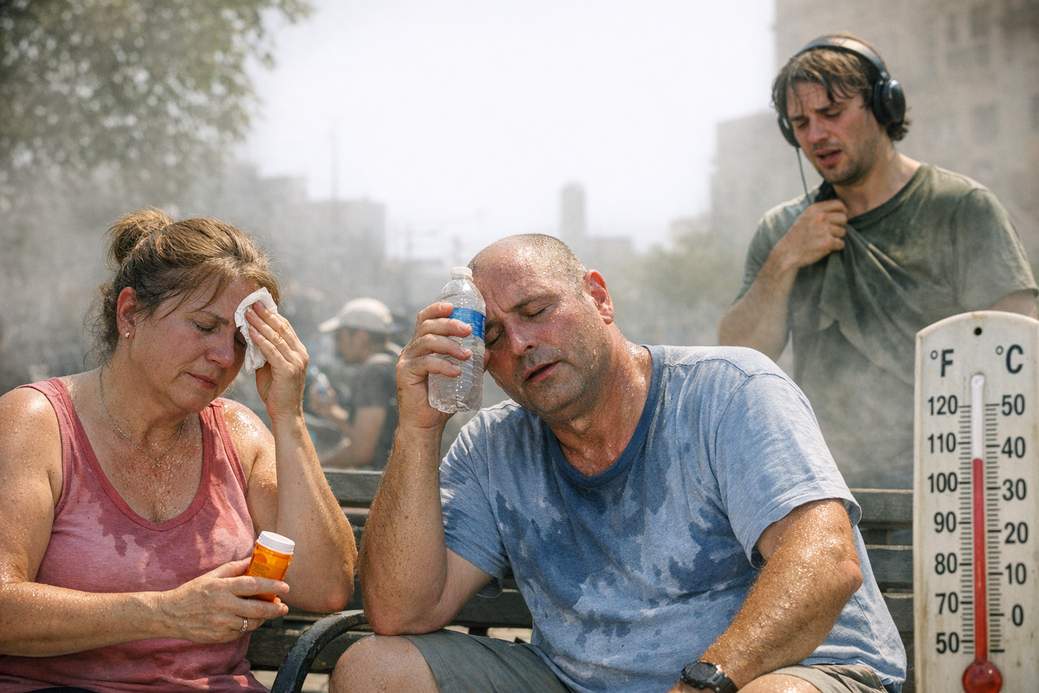
Older adults are a big at-risk group: they’re more likely to be on multiple medications, and aging bodies don’t regulate heat as well. But it’s not just age — outdoor workers, people in urban heat islands, folks who can’t afford air conditioning, and people experiencing homelessness are also at higher risk. Medication plus environment can be an unfortunate duet.
True-to-life moments: when it hits you in the face
Some people discover this the hard way. One person living in a sweltering top-floor apartment noticed sleep-blackout levels of fatigue and extreme sweating during a heatwave — only later realizing medicines for anxiety and depression were likely part of the problem. Another found that a cocktail of psychiatric meds and an ADHD prescription left her more irritable, unfocused, and sweatier than usual during a humid stretch. Knowing that the meds could be involved made both of them feel less panic-y and more prepared.
Don’t panic — but don’t stop meds without a plan
Please don’t abruptly stop any prescribed medication. That can lead to relapse or withdrawal and other serious problems. Instead, talk to your prescribing clinician about whether dose adjustments, different timing, or alternative drugs might reduce heat risk while keeping your condition managed. Doctors should ideally flag heat-related side effects when starting a medication — but that conversation doesn’t always happen, so bring it up.
Practical, low-drama ways to stay safer in the heat
– Drink water regularly (small amounts often beats chugging once and pretending you’re hydrating for the week).
– Avoid peak sun hours and heavy physical exertion midsummer; shift activities to cooler parts of the day.
– Wear light, breathable clothing and a hat. Yes, your fashion choices can be heroic.
– Use fans, air conditioning, or visit public cooling centers, libraries or cafes if your home is a furnace.
– Keep a basic list of your medications on you and share it with any caregivers or friends so if you get woozy someone knows what could be involved.
When to get help right away
If someone is confused, fainting, acting very unlike themselves, or has vomiting, seizures, very high body temperature or loss of consciousness, treat it as an emergency — get them to urgent care or call emergency services. Heat stroke is serious and fast-moving.
Final note: small changes, big relief
Medications do a lot of good, and for many people the benefits outweigh temporary annoyances. The real win is awareness: once you know your meds can affect heat tolerance, you can plan for it — talk to your clinician, stay hydrated, avoid the worst sun, and keep an eye on symptoms. For some people that knowledge is already calming; for others it might mean a safe tweak or two. Either way, you don’t have to bake quietly this summer.