Movie madness in the desert
Picture this: a multi-million-dollar epic being shot near Baghdad, hundreds of extras, Hollywood-style sets, and Oliver Reed doing what Oliver Reed does best — off-script chaos. That’s Clash of Loyalties for you: an ambitious, awkward mash-up of nationalist history, big budgets and, well, real-world bad timing.
The biggest headache wasn’t the war
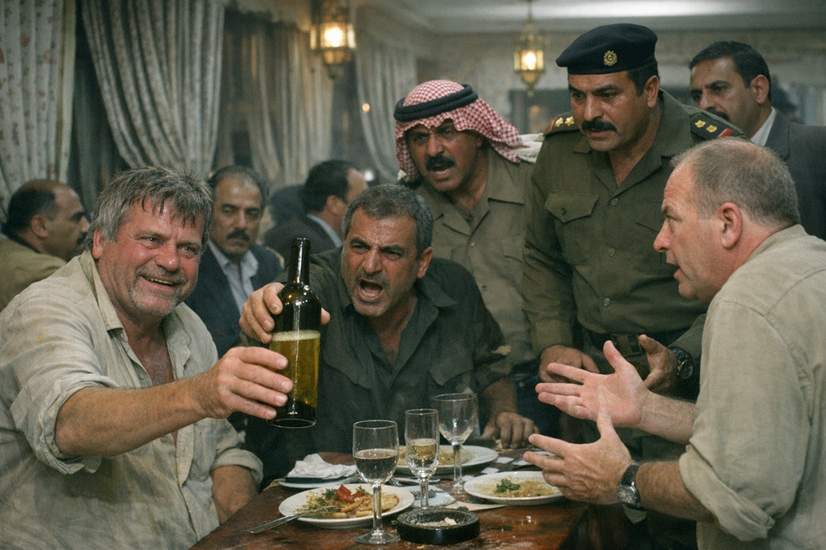
You’d think the Iran–Iraq war, troops getting called up mid-shoot, or customs officers refusing prop weapons would be the production’s undoing. Nope. The moment that nearly stopped the whole thing in its tracks involved Oliver Reed, a bottle and a restaurant. When the star decided to relieve himself (literally) in an empty wine bottle and cheekily gift it to the next table, Iraqi officials flipped out and demanded he go. The producer somehow talked them down — which is producer-speak for a lot of frantic negotiations and a few sleepless nights.
Saddam’s blockbuster dream
After taking power in 1979, Saddam Hussein fancied turning Iraq into a film hub — think Baghdad meets Bollywood with a sprinkle of Tinseltown. The plan was to make sweeping historical movies that cast his regime in the starring role. Clash of Loyalties (aka The Great Question) was supposed to be his pride and joy: a grand retelling of events from the 1920 nationalist uprising and the birth of modern Iraq, loosely pitched as “Saddam’s version of Lawrence of Arabia.”
Filming under fire — sort of
Production started right before the Iran–Iraq war erupted. The crew was told to carry on as if nothing was happening, because optics matter. They actually paused for a couple of weeks, then pretended everything was fine. Cast members reported eerie details: planes escorting their flights into Iraqi airspace and landings done without runway lights to dodge missiles. Local actors would vanish into military service, forcing reshoots. And transporting props became an international logistics nightmare thanks to overcautious customs.
Props, borders and a very long detour
Prop guns that looked suspicious to Turkish customs had to be rerouted on a grand world-tour by land and sea: Greece, Lebanon, Syria, then across desert roads into Iraq. Ships, trucks and a lot of sighing later, the kit arrived — which is a good reminder that when you try to make a historical epic in a volatile region, your biggest co-star might be a freight forwarder.
The exploding train that made headlines
One stunt involved blowing up a disused train (movie explosives — not real combat), but the line they found was uncomfortably close to the Iranian border. The day after filming, Iranian media claimed their forces had attacked and destroyed a military train inside Iraq. Cue diplomatic eyebrow-raising and a land of confusion where movie special effects and regional tensions briefly blurred together.
Cast hijinks: arm-wrestles, windows and wine bottles
Oliver Reed’s antics went beyond the bottle incident: arm-wrestling, drunken scuffles and general mayhem made him both a headache and a headline. Tales from co-stars include seeing him dangled upside-down from a Baghdad hotel window while laughing like it was the best joke ever. Some people called him a one-man wrecking crew; others called him unforgettable.
Spies, snaps and an awkward interrogation
Another actor was roped into a less glamorous subplot: local security services wanted photos of Baghdad for obvious reasons. He was visited by men in suits who asked him to take pictures and then, much later, found himself questioned by Iraqi authorities who’d taken an interest in his travel snaps. A quick bluff about meeting Saddam and being on official business apparently did the trick — the interrogation ended and he left the country in full 1920s costume. You can’t make this stuff up, but the production definitely tried.
Premiere, brief praise, then burial
The finished film did make the festival rounds — it even picked up an award at Moscow in July 1983 — but it never got the widespread release its backers hoped for. After Iraq’s invasion of Kuwait and the years of sanctions that followed, the film was essentially shelved. Copies ended up boxed away; the grand plan for a booming Iraqi cinematic industry faded into the background, a single oddity rather than the start of a trend.
What the producer remembered
The film’s producer, who had decades of regional filmmaking under his belt, summed it up with weary perspective: making movies suddenly felt quite small compared with the human cost of wars that followed. Clash of Loyalties remains a curious footnote — a flashy, turbulent attempt to merge politics, propaganda and the silver screen, complete with drunken stars, exploding trains and shipments rerouted around an entire continent.