Content warning: this story includes descriptions of a dead body and may be upsetting to some readers.
How Evita became more than a person
Eva Perón died in July 1952 at just 33 years old from cervical cancer. Her husband, President Juan Perón, wanted to preserve her not only as a person but as a political symbol — the face of the working class and a talisman for his movement. He commissioned Spanish anatomist Dr Pedro Ara to embalm her using advanced techniques, leaving the corpse in an uncanny, lifelike state so people could keep visiting and mourning.
From national shrine to political headache
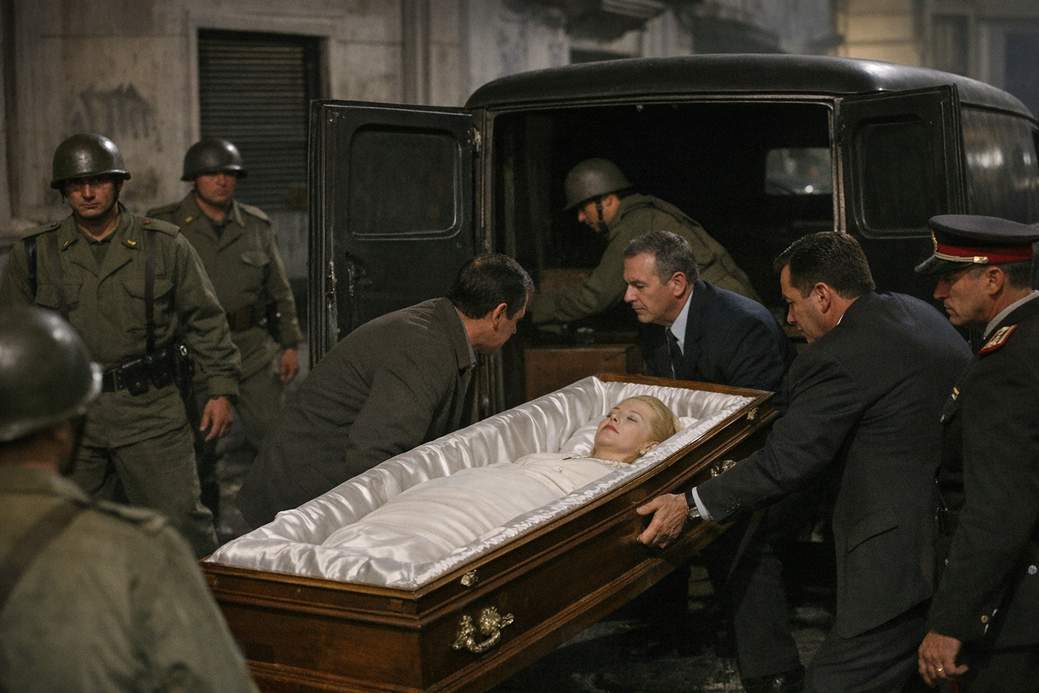
For two weeks after her death, crowds queued by the millions to pay respects as she lay in state. But the adoration she attracted also made her a liability. In 1955 Perón was overthrown, and the new anti-Peronist authorities panicked at the thought that Evita’s body might rally supporters. What followed was a bizarre campaign to erase the symbol — by making the body itself disappear.
The secret tour: vans, basements and Milan
Army intelligence took charge of Evita’s remains and started shuttling the coffin around Buenos Aires to keep it out of sight and out of reach. Stories say the body was hidden in everything from service vans to municipal buildings. Eventually the military sent it abroad: in 1957 the corpse was shipped to Italy and buried in a Milan cemetery under a false name. Supporters back home continued to scribble graffiti and ask the same painful question: where is Evita?
Obsession, odd behavior and urban myths
Where official records end, rumor and legend take over. Some senior officers allegedly treated the coffin like a curiosity — showing it to visitors and standing it upright in offices. One account claims the man entrusted with the body became so obsessed with it that those who knew him noticed a disturbing change. Over the years myth and fact braided together: the corpse’s movements, occult tales and whispered conspiracies all fed a growing cult around the woman herself.
Back to Madrid — and the return home
As Argentina’s politics shifted again, the authorities agreed to hand the body over to Juan Perón in exile. In the early 1970s Evita was delivered in a silver coffin to a villa near Madrid where Perón and his wife Isabel cared for it. The arrival sparked strange, almost devotional behaviors: stories of careful cleaning, combing and even superstitious rituals circulated, reflecting how Evita was treated as if she were more sacred relic than mortal remains.
The final chapter: restoration and a deep, guarded grave
After Perón’s death and his return to power, Evita’s corpse came back to Argentina and was given to a conservator to be restored. The conservator later said the job brought danger — threats and pressure from people who preferred the mystery to remain. In October 1976 she was finally buried in a heavily secured crypt in Buenos Aires. The tomb was designed with multiple trapdoors and chambers — a literal maze to keep the body at least five meters below ground and out of anyone’s hands.
Why the story still matters
Beyond the grotesque details, the saga of Evita’s remains says something about how societies turn people into symbols. Whether loved or loathed, her corpse became political currency — valuable, feared and contested. The weird, 16-year journey of Evita’s body reads like dark theatre: part obsession, part statecraft, and entirely a reflection of how powerful myths can outlast a life.