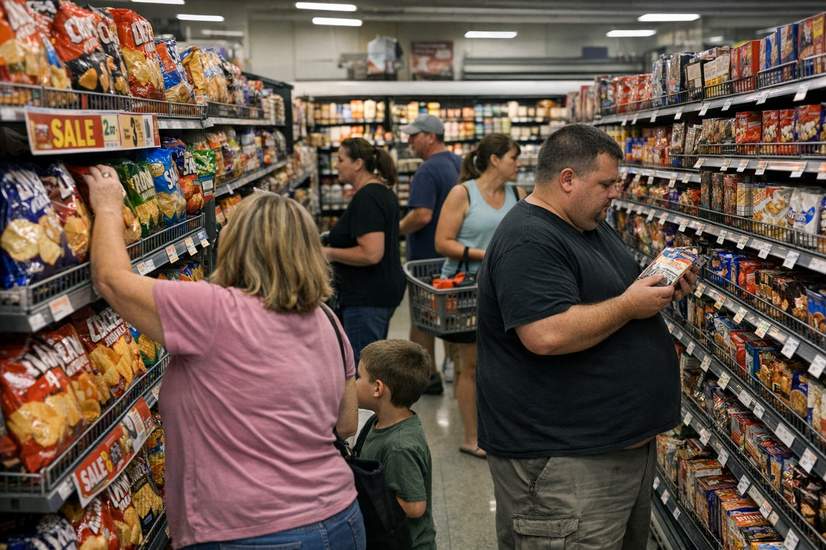
Supermarket jungle and the UPF invasion
Ever wandered into a grocery store and felt like the shelves were conspiring against your good intentions? You’re not imagining it. Our surroundings, from end-of-aisle displays to flashy packaging, nudge us toward ultra-processed snacks that are engineered to be hard to resist. Over time, that nudge can turn into extra pounds and worse health outcomes.
We live in an era of plenty, but plenty doesn’t always mean healthy. Diets loaded with ultra-processed foods (UPFs) are linked to weight gain and other health problems. And because the environment is stacked in favor of profit, not nutrition, choosing well often feels like swimming upstream.
The food environment: it’s not just you, it’s everything around you
Researchers warn that if current trends continue, a large chunk of the world’s adults could be overweight or obese by mid-century. That’s not a judgment — it’s a warning sign that the system is doing a lot of the decision-making for us.
Experts like Franco Sassi point out that people assume they’re making free choices, but the truth is our choices are shaped by what’s available, how things are marketed, and where products are placed. In short: the environment tells your eyeballs what to want.
Labels do weird things (often for the better)
One surprising lever is labeling. When packaging clearly flags unhealthy products, shoppers actually change habits. For example, bold warning labels introduced in some countries led to notable drops in purchases of high-calorie, high-sugar items. That kind of blunt honesty forces a pause: you see the label and reconsider.
Another approach is the Nutri-Score — a friendly color-and-letter badge that ranks food from “green/A” (pretty good) to “red/E” (meh). Where it’s used, some companies reformulated recipes, retailers promoted better options, and shoppers started buying smarter. Labels aren’t magical, but they create quick signals that help busy brains make better choices.
Personal coaching works — but it’s not a magic wand
Individual support can move the needle, too. Small trials where people received one-on-one coaching, shopping tips, and simple low-UPF meal plans saw participants cut back on ultra-processed foods and report weight loss and better wellbeing. In one study, participants reduced UPF intake by roughly a quarter after six months.
That’s promising, but personalized coaching takes time and money, and healthy groceries often cost more. Plus, one-off solutions don’t fix a system built to sell you more of the same processed stuff. Experts say we need combined actions — policy, labeling, education, and practical help — to get real results.
Quick, usable takeaways for your next grocery run
You don’t need to become a nutrition scientist overnight. A few practical moves help: scan for simple front-of-pack labels (if you have Nutri-Score or warning icons, use them), try cooking a few basic recipes from scratch, shop the store perimeter for whole foods, and give yourself small wins — one swapped snack at a time.
Change won’t happen by willpower alone. Better labels, smarter policies, and a little coaching can tip the balance. The food environment is powerful — but now that you know its tricks, you can play them back.