Intro: nicotine vs. the mind-bender
Nicotine is sneakily stubborn — more clingy than your favorite hoodie and harder to leave than bad Wi‑Fi. Most smokers want out, but only a tiny slice manage to quit each year. Lately, a surprising contender has entered the ring: psychedelic mushrooms. Researchers are finding that a well-timed, professionally guided psilocybin session plus therapy can sometimes yank people out of lifelong smoking habits in ways patches and gum rarely do.
The eye-popping results
There’s both survey talk and lab evidence. People who’ve taken LSD or magic mushrooms have reported cutting down or stopping smoking after a trip — often because their priorities shifted and cigarettes suddenly felt pointless. More rigorously, a recent controlled trial compared talk therapy paired with a psilocybin dose to the same therapy paired with nicotine patches. Months later, the psilocybin group was leaving their smokes behind at much higher rates (about half stayed quit at six months versus roughly a quarter with patches).
A quick history lesson: not the first psychedelic rodeo
Psychedelics aren’t brand-new miracle workers. Scientists tried LSD for alcoholism in the 1950s, MDMA has helped some people cut back on booze, and compounds like ibogaine have shown promise with opioids. The psilocybin-for-smoking work stands out because smoking causes huge preventable harm worldwide, so any treatment that actually moves the needle is potentially a big deal.
How a mushroom trip might break a habit
The current thinking isn’t mystical woo — it’s brain plasticity plus psychological reset. A psychedelic experience can briefly make the brain more flexible, opening a window where people are unusually receptive to changing habits. In therapy, that can translate into learning new ways of coping and seeing cigarettes as less appealing or useful. In plain language: the trip shakes up your mental grooves long enough for therapy to lay down new tracks.
What the clinical studies did
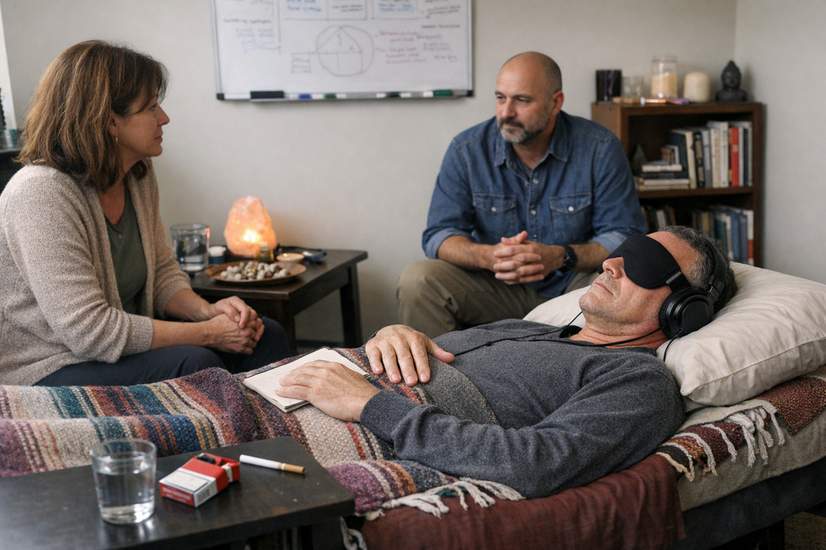
In the recent trial, smokers got therapy sessions alongside either a single, weight‑adjusted dose of psilocybin or a standard nicotine patch program. Therapists guided participants before, during and after the experience, helping them focus on quitting. At six months, quit rates were notably higher in the psilocybin arm. Earlier, smaller studies that gave multiple guided doses also produced encouraging short‑term abstinence rates.
The practical bits therapists use
Clinicians don’t just hand over a mushroom capsule and say “good luck.” Treatment involves preparation, the supervised psychedelic session itself, and follow-up psychotherapy to integrate insights. Therapists may layer in practical tools — like mindfulness, exercise, and coping strategies — to make behavioral changes stick once the immediate effects wear off.
The fine print and why caution matters
Before you toss your patch into the sea: these studies are still early. Many trials had small samples, often skewed toward particular demographics and people with prior psychedelic experience. Psychedelics are still illegal in many places and can have psychological risks for some people. Scientists are running bigger, multi-site trials (including government-funded work) to see if the promising results hold up and to figure out who benefits most.
Bottom line
Psilocybin-assisted therapy looks like a genuinely interesting new tool in the smoke‑quit toolbox — not a magic wand, but a potentially powerful jump‑start for people stuck in long-term habits. If the larger trials confirm the early wins, this could become an option for smokers who haven’t found success with existing methods. For now, it’s an exciting area of science with real promise and plenty of questions left to answer.