Why eating together matters
Eating is more than fuel — it’s a tiny ritual that can actually make life nicer. Sharing a meal with other humans (a practice scholars call commensality) has been linked to better mood, stronger social bonds, and even healthier brains. Think of it as social glue served with a side of carbs.
What is commensality (and why it’s ancient, not trendy)
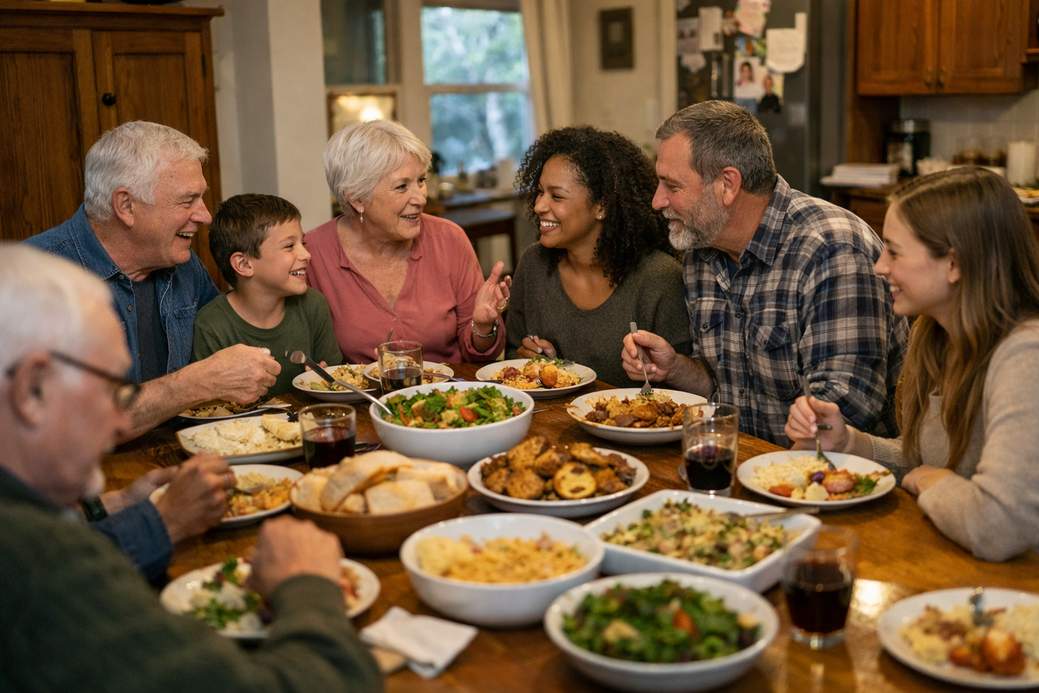
Commensality simply means eating with others. It’s been part of human life for millennia: meals helped form families, teams and tribes long before calendars and group chats existed. When we eat together we literally slow down, talk, and notice each other — small things that add up.
Mental health perks: less gloom, more connection
Researchers have repeatedly found that people who eat with others are less likely to feel depressed. Large surveys and targeted studies of older adults show a clear link between the number of mealtime companions and better emotional wellbeing. In other words: more shared plates, fewer gloomy days.
Brains like company too
There’s growing evidence that regular solo-eating can be bad for the brain over the long run. Some studies report shrinkage in areas tied to memory and cognition among people who frequently dine alone. Experts think the reasons include less mental stimulation, weaker social support, and even the stress that comes from feeling isolated — all of which can chip away at brain health.
Food tastes better in good company
It’s not just feelings — presence matters for flavor. Experiments show people rate treats like chocolate as tastier when they share them with someone else. There’s also a biochemical angle: social meals can trigger feel-good chemicals that make the whole experience more rewarding.
What we can learn from other cultures
How often people eat together varies by country, and some cultures put communal meals at the center of daily life. Places with a strong tradition of shared meals often celebrate cooking and eating as a social act, not just a bodily function — and that cultural emphasis seems to help people stay connected.
How to eat together more (no drama, no dating app needed)
If you want to eat less like a lone wolf, start small. Invite a neighbor for coffee, organize a casual potluck, or turn simple dinners into a recurring hangout. Plenty of apps and community groups also exist to connect people who want company at mealtimes — and experiments show that low-pressure, “platonic date” meetups can boost social confidence.
Quick tips to make shared meals work
Keep it low-stakes: don’t over-plan, keep portions flexible, and treat it as a chat, not a sit-down interview. Rotate hosts if you can, share simple cooking, and focus on good conversation more than perfect plating.
Final bite
Sharing food is a cheap, easy way to lift mood, sharpen the mind, and make life feel friendlier. So next time you’re tempted to eat alone in front of a screen, consider inviting someone over — you might end up with a new friend, a tastier meal, and a happier brain.