From street scrapes to script gold
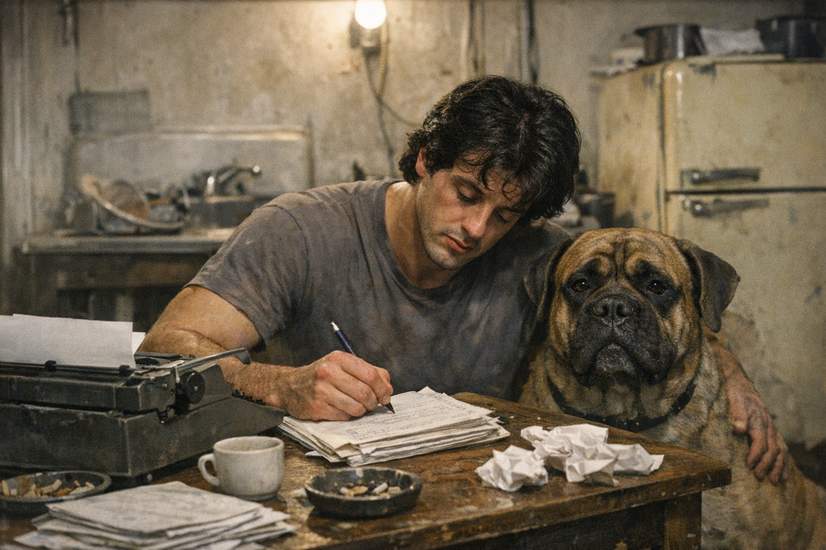
Picture this: early 1970s New York, a broke aspiring actor with a crooked smile, a mutt named Butkus, and a steady job gutting fish to keep the lights on. That was young Sylvester Stallone — auditioning for parts that never materialized, tinkering with his voice recordings to smooth out a speech quirk, and generally getting told “no” a lot. That string of rejections and odd jobs is the seed of I Play Rocky, Peter Farrelly’s new film about how Stallone dreamed up Rocky and somehow changed Hollywood.
How a three-day scribble became a legend
Fed up with being typecast as the heavy, Stallone started writing scripts so he could play the roles he actually wanted. According to the movie’s portrayal and Stallone’s own accounts, he knocked out the Rocky screenplay in a matter of days — a raw, emotional punch of an idea that felt personal and universal at once. Producers wanted to buy the script and hand the lead to a big-name star, but Stallone refused to sell the part. He wanted Rocky. Broke but stubborn, he held his ground.
The eventual deal was as scrappy as the script: a tiny budget and producers who only had leverage if they kept costs down. That meant casting control fell the other way — and the unknown lead ended up being Stallone himself. Risky? Absolutely. Worth it? Very much so.
A furious, shoestring shoot
Director John G. Avildsen and the crew shot Rocky in astonishingly fast, low-budget fashion — roughly 28 days. Money was tight, so setups were often rushed and many scenes were filmed in single takes. Practical effects and improvisation filled in for what they couldn’t afford. The famous bit where Rocky pounds frozen meat? Stallone’s knuckles paid the price for realism.
The studio didn’t exactly roll out the red carpet. Early reactions were lukewarm and marketing was light. But when audiences saw it, the unexpected happened: people connected. Rocky exploded at the box office, racked up a pile of Oscar nominations — winning best picture — and turned its unknown writer-actor into a megastar almost overnight.
Why we still love the underdog
Part of Rocky’s power is obvious: it’s both an underdog story on-screen and the real-life underdog story of its creator. The movie doesn’t cheat the ending with a guaranteed trophy; Rocky doesn’t have to win to be triumphant. That stubborn refusal to quit — to get up, brush off the blood and keep going — is what lets viewers see themselves in him.
It also landed at the right moment. Mid-1970s America was bruised and cranky, hungry for something sincere and hopeful. Rocky’s grit-and-heart recipe filled a cultural gap, and its influence rippled out into sequels, spin-offs like Creed, and a whole lot of cinematic stubbornness that followed.
Why this story still matters
I Play Rocky revisits that origin myth with a wink and a warm heart: the living-room-level desperation, the fierce stubbornness, the odd compromises (including the fate of one very patient dog), and the tiny miracles that tipped everything over into legend. It’s a reminder that some success stories start with being flat broke and refusing to sell yourself short.
The film is due for release on 6 November 2026 in the UK, Ireland and North America. Whether you’re a fan of boxing movies, ’70s grit, or stories about people who keep getting up — this one’s for you.