Meet Laika: a street dog turned space pioneer
In late 1957, a scrappy female dog from Moscow’s streets was launched into orbit on a mission nobody planned to return from. Her name became shorthand for cold-war daring, scientific haste, and a heavy dose of moral controversy. The flight proved that a living creature could survive the first hours of weightlessness — but it also showed how rushed politics and technology can collide with tragic consequences.
Why a dog — and why a stray?
The Soviets picked dogs instead of monkeys or mice for a few practical reasons. Dogs’ physiology had been studied extensively in Russia, and stray animals that had survived city life were tough, adaptable and used to rough conditions. Female dogs were preferred because they tended to be more cooperative and could physically fit into the small capsules — usually under 6–7 kg. The idea was to test whether a warm-blooded mammal could tolerate launch stresses and weightlessness before trying human crews.
Speedy politics, hurried preparation
The first satellite success left Soviet leaders wanting more — and fast. Leadership wanted a follow-up display of technological muscle for a national anniversary, which compressed preparation time into mere weeks. That rush meant systems were not fully refined, and some safety and comfort features did not get the engineering attention they needed.
Training the candidates
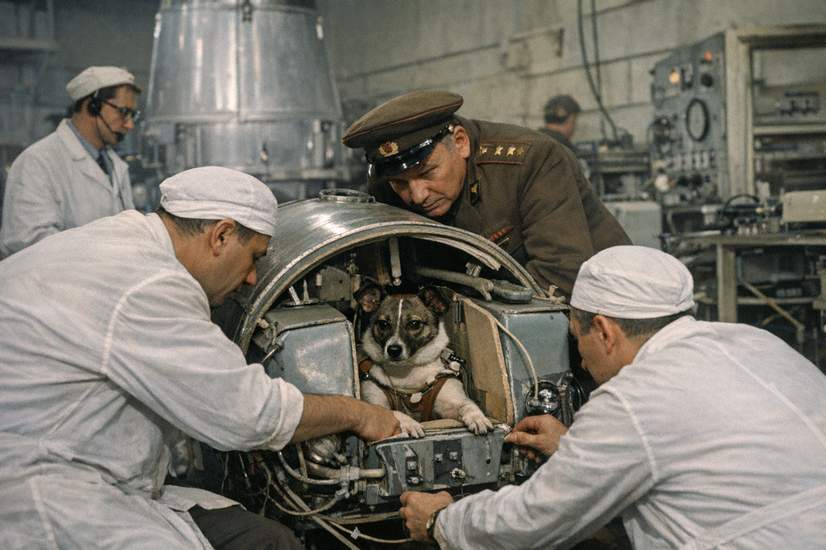
The selected dogs lived through a bizarre training regimen: tiny pressurized capsules, changing air pressures, simulated noise and vibrations, and long stints crammed into confined spaces to see how they coped. Researchers used strays because they had stamina and low maintenance needs, and trainers looked for calm, tolerant animals who wouldn’t panic in the weird environment of a rocket.
The flight and what went wrong
Laika launched into orbit in November 1957 and became the first dog — and first animal — to circle the planet. She reached orbit alive, but life-support systems overheated and failed within hours. For decades the official picture was muddled and contradictory; it wasn’t until many years later that the truth about her short life in orbit was confirmed. The mission was a one-way trip from the start because the technology to bring living passengers safely back had not been solved yet.
Outrage, reflection, and change
The mission sparked global backlash. Animal welfare groups protested and public sympathy ran high. The negative reaction pushed space programs to change how they treated animal test subjects; later missions included recovery systems and greater care for the animals involved. Within a few years the Soviets did send dogs into space and bring them back alive, proving the return systems could work.
Legacy — memorials, icons, and mixed feelings
Laika became a lasting symbol of early space exploration: immortalized on stamps, memorabilia, and monuments. Yet the story is complicated. Many involved in the program later spoke with regret about the mission, and their remorse became part of Laika’s legacy as much as the technical milestone. Her flight opened a door to human space travel, but it also left a question: at what cost does progress come?
Remembering Laika today
Now the tale of that brave, unwanted city dog reads equal parts triumph and warning. She showed that life could endure the cosmos’ first hostile hours, and she also reminded the world that even great leaps forward can carry real victims. It’s a story that mixes awe, sorrow, and the odd surreal image of a Moscow mongrel forever circling the planet.