A bear that wouldn’t stop growing
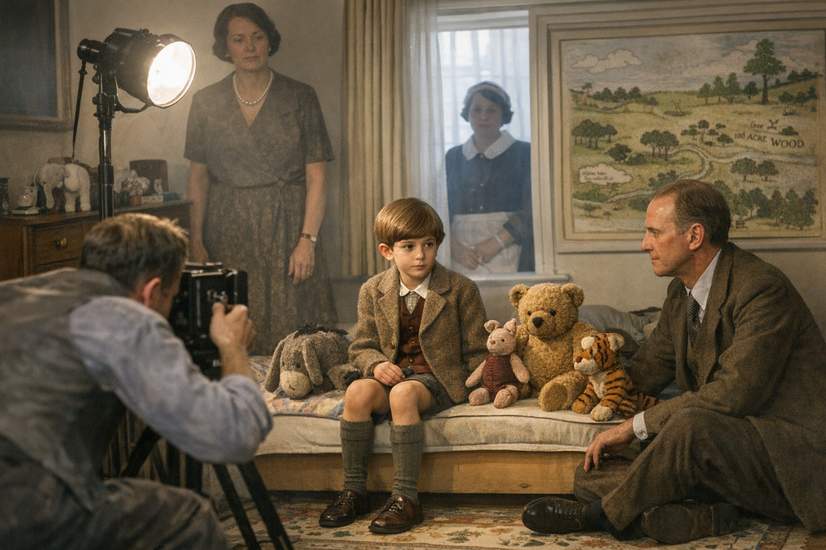
Almost a century after AA Milne tucked his characters into the Hundred Acre Wood, Winnie-the-Pooh has gone from bedtime companion to global pop-culture boss. The stories started as gentle poems and playroom adventures inspired by Milne’s son and a handful of stuffed animals, but over the decades Pooh and his crew have been animated, merchandised and meme-ified in ways no one could have predicted.
Pooh’s fame reached everywhere — movies, theme parks and internet jokes — which is delightful for fans and lucrative for corporations, but it also meant the little fictional boy who launched all this attention never really faded into the background.
A boy, his toys, and a rather distant childhood
The child who inspired Christopher Robin grew up in a household where nannies did a lot of the day-to-day parenting, and his early memories were more of scheduled visits than cuddly family time. Milne made playground games and soft toys into books, but the boy at the center of those stories later felt they had been shaped and circulated without his being asked.
What was meant as affectionate storytelling ended up feeling, to him, like a piece of his private life being turned into public property — a funny, marketable version of his childhood that people loved to point at whenever his name came up.
The awkwardness of being famous for someone else’s imagination
As he got older, the gap between the cheerful character in the books and the shy real kid became more and more uncomfortable. Being teased, singled out or treated like a walking storybook didn’t exactly help with school or job prospects, and the attention that once might have felt flattering turned into a heavy label.
He resented the idea that his father’s success rested, in part, on using episodes from his childhood. The fictional Christopher refused to stay fictional in the eyes of the world, and the real Christopher found that painful. He avoided the house where those tales began and even wrote about the feeling that his own identity had been, in a way, borrowed.
Running away, then coming back
There were dramatic gestures: a refusal to cross the threshold of the family home, a few sharp letters, and a habit of steering conversations away from Pooh. Yet time and perspective softened some of the edges. He did return to the woods years later to play the Pooh Sticks game himself, and he took practical steps to protect the place that had been both inspiration and irritant by helping preserve the forest.
Still, the coping tactic was simple and honest: dodge the topic when people brought it up and keep moving on.
Understanding, complicated
Near the end of his life he found a kind of truce with the stories. He came to appreciate that his father had nowhere near intended to exploit him — rather, those books were one person’s awkward, wonderful attempt to express feelings he couldn’t easily say out loud.
In other words, Milne’s writing was less a theft and more an oddly sincere bridge between a guarded dad and the son he loved but didn’t always know how to show it to. The characters — even the gloomy ones — were ways to dress up emotions that might otherwise have gone unshared.
Why it still matters
The whole Christopher-Pooh saga is a reminder that stories can take on lives of their own. They can comfort millions and complicate one life at a time. It’s also a human tale about fame arriving without an instruction manual: a boy becomes a character, a family becomes public property, and the real person has to find a way to be himself despite everyone else wanting a piece of the story.
So the next time you see a picture of a honey-loving bear or chuckle at a Pooh meme, spare a thought for the awkward, shy human who once hated being the famous face in that picture — and who, eventually, learned to live with the mix of blessing and bother that comes from being woven into someone else’s art.