Meet Peggy: a glorious mess of art, love and rebellion
Peggy Guggenheim was the kind of person who made polite society clutch its pearls and modern art breathe a grateful sigh. Born into the Guggenheim clan but allergic to buttoned-up life, she spent her days hunting for startling art, her nights falling into messy romantic adventures, and her pockets on a mission to save creative chaos from being forgotten.
From bookshop mischief to real-world lessons
Instead of becoming a country-club ornament, Peggy drifted into Sunwise Turn, an eccentric bookshop and mini-salon in New York run by women. It was less about retail and more about rubbing shoulders with artists and learning how a woman could run a life that wasn’t scripted. That tiny rebellion rewired her—golf was off the table, curiosity was on.
Guggenheim Jeune: London’s art spoiler-in-chief
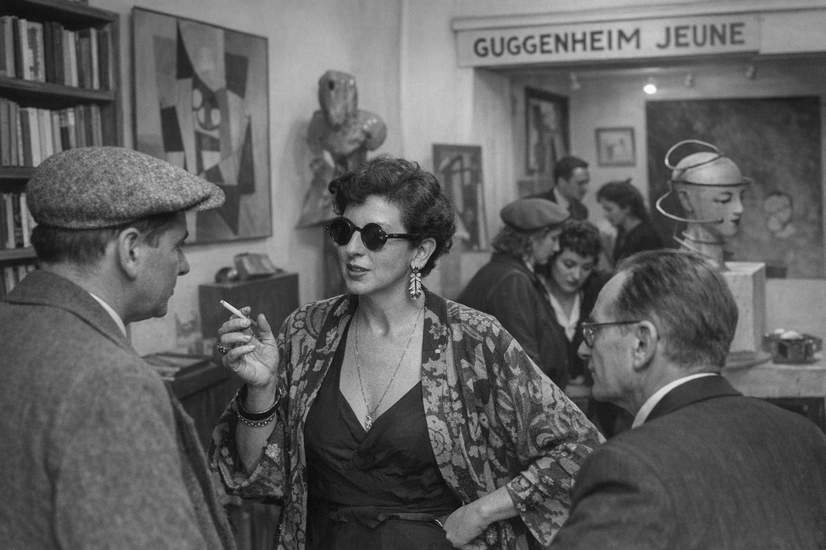
She opened a tiny but turbo-charged gallery in London called Guggenheim Jeune. It was unapologetically international, startling local tastes with shows that ranged from cheeky Cocteau sheets to avant-garde sculpture. When customs and museum directors argued whether some pieces were even art, Peggy fought back—sometimes winning, always making a mess of the status quo in the best possible way.
One woman’s mission to save ‘degenerate’ art
As Europe slid into war, Peggy refused to let masterpieces become fodder for the Nazis’ bonfires of taste. She hustled artworks out of danger—sometimes smuggling crates labelled as household goods, sometimes using favors and risky plans. It was dangerous, dramatic, and wildly heroic: she rescued painters and sculptures, and in doing so saved a chunk of 20th-century art history.
Art of This Century: New York’s rebellious clubhouse
Back in the U.S., Peggy opened Art of This Century, a gallery that acted like a nerve center for the new American avant-garde. She supported rising titans—artists like Jackson Pollock and Mark Rothko—often giving them the small financial boosts that let them actually make work instead of folding into day jobs. She also curated audacious shows, including the first major all-women exhibition in America.
Tabloids, tell-alls and the myth machine
Peggy loved to live out loud. Her frank autobiography and colorful personal life guaranteed endless scandal columns, and gossip often drowned out the headline-worthy part: she built a collection, and she built it by taking risks. She seemed to enjoy rattling the family and the public—part provocation, part joy.
From scorn to museum rooms
Later in life, institutions that once sniffed at her choices began celebrating them. Peggy finally got the nod from big museums and the world acknowledged what she’d long done: collect, protect and champion artists who would shape modern art. Venice’s museum that houses her collection is now beloved by visitors, proof that her stubborn instincts paid off.
Why Peggy matters—beyond the gossip
Forget the gossip column caricature. Peggy Guggenheim’s real legacy is stubborn and simple: she saw the future of art before many others did, she used whatever means she had to protect it, and she gave artists a platform when few others would. As one contemporary quip might put it: messy love life, immaculate taste—mission accomplished.
Final curtain
She wasn’t perfect. She was loud, romantic, occasionally reckless, and frequently brilliant. But without Peggy’s appetite for risk and her slightly scandalous flair, a lot of the art we now revere might have had a far rockier ride into history. In short: she did it—no permission slip required.