A two-week global gasp
In mid-October 1962 the world collectively held its breath. For about 14 days, the U.S. and the Soviet Union strutted, postured and whispered like two very stubborn roosters — except with the potential for nuclear fireworks. The situation began when American spy photos revealed Soviet missiles on an island a stone’s throw from Florida, and suddenly casual life felt a lot less casual.
How someone noticed the missiles (spoiler: photos did the talking)
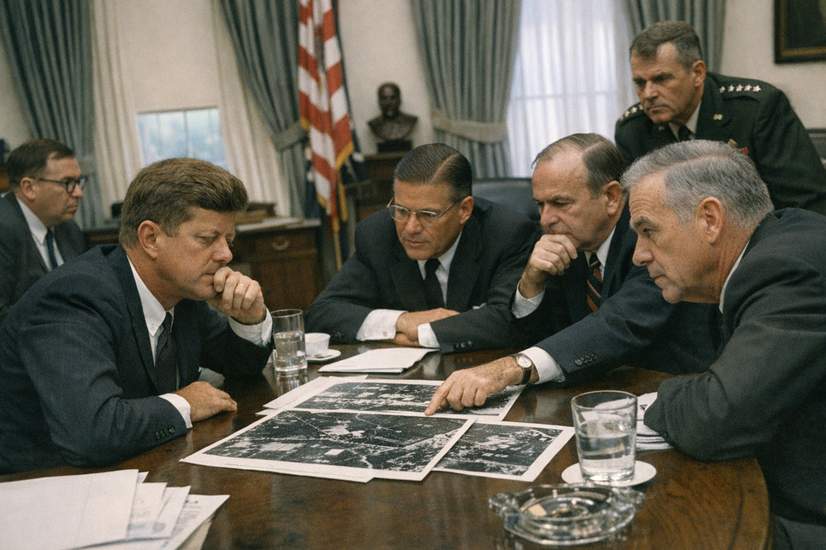
A high-flying reconnaissance plane and a sharp pair of eyes changed everything. Once analysts studied the photos, the picture was impossible to ignore: missile sites were being assembled in Cuba. That discovery kicked off a frantic scramble for more intel, frantic meetings, and a whole lot of quiet panic in Washington.
Not the time for grandstanding: the poker game in the Oval Office
President John F. Kennedy could have slammed the photos down on the table and demanded answers. Instead he kept them zipped in a drawer and played chess, not checkers. He met with Soviet representatives, said the right ominous-sounding things in public, and privately gathered a tight circle of advisers. It was a high-stakes poker game where showing your hand at the wrong moment could have made a very bad day worse.
ExComm, arguments, and that famous line about earning your pay
Kennedy assembled a crisis team — ExComm — and the debates were intense. Some voices pushed for immediate military action, while others warned that an airstrike or invasion might spiral into an all-out nuclear exchange. The president famously sized up the room and, with a mix of dry determination and gallows humor, suggested it was time to do the job they’d been paid for: make the hard call without blowing up the planet.
The quarantine: a calm-but-firm move
Rather than launch a strike, Kennedy ordered a naval quarantine of Cuba and demanded that offensive weapons be removed. This middle path signaled strength without instant escalation — a move that bought breathing room and forced Khrushchev to reckon with options that didn’t include immediate war.
How a bartop gossip almost triggered everything
One of the wildest moments came thanks to a misheard conversation in a Washington bar. A Soviet agent overheard talk suggesting reporters were getting ready to cover an invasion — which Moscow interpreted as a signal that an invasion might actually be imminent. The message made its way to Khrushchev and ratcheted up Soviet nervousness. In reality, the journalists were speculating about contingency plans, not confirming an attack. Miscommunication, as it turns out, is a terrifyingly effective ingredient in international crisis.
Time, tact and the art of letting someone save face
Behind the scenes, Kennedy and his brother Robert (a key adviser) seemed to understand something important: leaders under pressure need exits that let them preserve dignity. The Americans deliberately stretched negotiations and signaled restraint, which gave the Soviets room to back away without looking cornered. That patience — and an appreciation of how awful a nuclear exchange would be — helped nudge both sides toward a deal.
Aftermath and the odd little lessons
When the Soviets agreed to withdraw the missiles, the immediate danger faded. But the episode left behind a bundle of lessons: intelligence can be messy, overheard chatter can be wildly misleading, and crisis management is often about timing and psychology more than brute force. The Kennedys didn’t get everything perfect, but their mix of firmness, patience and strategic discretion prevented a catastrophe.
So… what’s the takeaway?
History sometimes hands you choice moments where skillful, slightly stubborn leadership keeps things from going off the rails. The Cuban missile episode is one of those moments. It shows how a few well-placed decisions, a calm head, and a lucky bit of ambiguity in a bar can be the difference between disaster and the world continuing on (mostly) intact.
End of story — and yes, you can sleep a little easier tonight knowing that, for once, clever diplomacy and restraint won the day.