Welcome to the 11th‑Century soap opera
Think of the Bayeux Tapestry as the Middle Ages’ version of a binge‑worthy true crime series, stitched in linen and gossip. It’s an enormous picture story from the 1070s about broken promises, raw ambition and a very dramatic end to King Harold II—complete with ships, swords, and a fair amount of macho posturing. After nearly a millennium in Normandy, the original is heading back to England for a major show at the British Museum.
All the men, most of the action
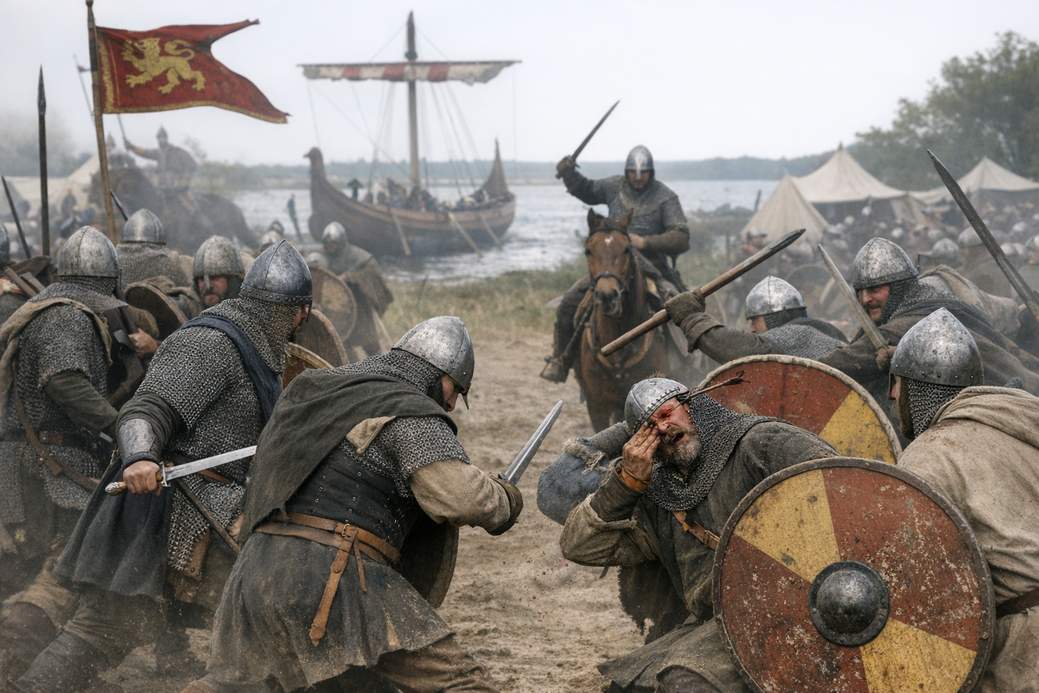
If you open the tapestry like a medieval graphic novel, you’ll notice it’s mostly men doing things: swinging axes, hauling boats, chopping trees, building ships and getting ready to fight. The narrative rides on feats of physicality—who can build, who can fight, who can look the most boss. At the centre of it is a rivalry between two alpha fellas—William of Normandy and Harold Godwinson—and the whole scene breathes testosterone.
Yes, the horses (and some humans) are flagrantly proud
One of the tapestry’s best‑known running jokes—if you can call an embroidered anatomical obsession a joke—is the frequent showing of male genitalia, especially on horses. Scholars have pointed out that these images are not random: they’re visual shorthand for potency, status and swagger. The biggest stallion gets the bragging rights, and that subtle equine flex helps tell viewers which side looks more formidable.
Why so few women?
Women don’t dominate the main story, and that’s partly because the tapestry tells a tale of military and political moves—areas that the artwork’s creators chose to frame as men’s business. The piece probably had a male patron and an audience of male peers in mind, so the focus stays on the battlefield and camp life. That doesn’t mean women are invisible everywhere, though—they turn up when emotions or power shifts need underlining.
Small but sharp female moments
The women who do appear tend to punctuate the action: a grieving queen wiping her face, a woman and child fleeing a burning house, or figures in the borders who hint at seduction and moral warnings. These appearances are brief but meaningful—little emotional beats that highlight consequences off the battlefield and remind us that war spills into homes.
Border gossip: naughty jokes and coded commentary
The tapestry’s decorative margins are where the stitchers get playful, cryptic and sometimes rude. These side stories include fables, obscene jokes and odd little scenes that can satirise the main events. One cloaked woman labeled with a name has attracted particular debate: is it a comment on harassment, a moral tale, or just a cheeky aside? Some scholars have even compared parts of the border to a medieval “Me‑Too” hint, while others shrug and call it mystery embroidery.
Who actually stitched it?
We don’t know every detail, but women’s hands were almost certainly central to making the tapestry. Whether nuns, workshop stitchers, or local embroiderers, those who embroidered the scenes might have had some freedom to add jokes or marginal digs. Even if a male patron commissioned the work, the people with needles could influence tone and texture—sometimes literally leaving the last laugh in the margins.
The Victorian cleanup and a new signature
A curious chapter came centuries later when Victorian sensibilities rewrote parts of the embroidery’s ribaldry. A faithful 19th‑century replica toned down the more explicit bits and, importantly, added a new border where each stitcher signed her name. That version quietly shifted attention to the women who actually made the piece—and reminded later viewers that the tapestry exists because of skilled female labour.
What it all means today
The Bayeux Tapestry is a noisy, visual argument about power: who gets it, how they show it and who gets left out of the conversation. It’s bawdy, political and oddly modern in its preoccupation with image and reputation. The tapestry’s tale of manly display only works because of the many hands—largely female—that turned idea into cloth.
See it in person
The original Bayeux Tapestry is on display at the British Museum from 10 September until 11 July 2027. The 1885 replica—with its Victorian tidy‑up and signed stitchers—remains on permanent display at Reading Museum. Go see it, laugh at the horses, and try not to be distracted by the border gossip.