The vase that set off a feeding frenzy
In the early 1970s the Metropolitan Museum of Art paid a jaw-dropping $1.2 million for an ancient Greek krater painted by Euphronios — a price that made headlines and rubbed a sore spot raw. Almost immediately people whispered that the showpiece hadn’t been politely donated by a noble benefactor but dug up and smuggled out of Italy. The drama turned a single pot into a symbol: if one museum would buy it, more looters would try to find the next headline grabber.
Grave robbers, or tombaroli, and their backyard digging
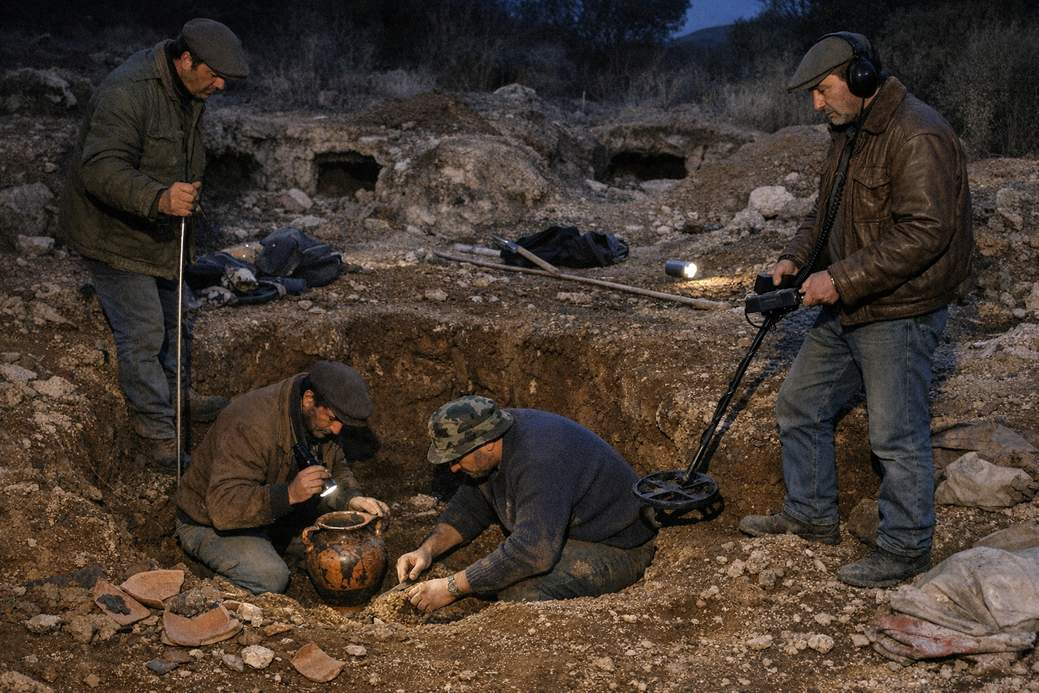
Outside Cerveteri, archaeologists’ worst nightmare was visible from the road: freshly opened pits where ancient tombs once lay undisturbed. Local tombaroli — professionals who make night shifts out of nighttime digging — would probe, poke and pry until something valuable showed. What they left behind was often more telling than what they took: smashed context, scattered fragments and a ruined puzzle that archaeologists could never fully reassemble.
Skewers, detectors and the gold rush math
The tools ranged from simple metal skewers used to listen for hollows in the bedrock to more modern electronic gear and metal detectors. The goal wasn’t always pretty pottery; small, dense objects like gold were easier to sneak out. At the time, collectors and some dealers treated the value like crude accounting: weigh the gold, multiply by a tidy factor, hand over the cash, and everyone moved on.
Museums, middlemen and the disappearing trail
Once an item passed basic authentication, there was often little appetite on the buyer’s side for hard questions about where it came from. Auction houses, private collectors and even major museums sometimes became the final stop for smuggled treasures. Decades later, evidence tying items to notorious traffickers led to repatriations — the famous Euphronios krater was returned to Italy after investigators connected it to a known smuggling network.
Police training, patchy laws and the global scramble
Authorities tried to fight back: special police units were taught to recognize looted antiquities and to spot suspicious activity. Still, policing centuries-old tombs across wide rural areas is like trying to plug potholes in a road that keeps collapsing. Elsewhere, vast jungles and unmapped regions offered perfect hideouts for treasure hunters who could vanish for months with their haul.
Why this is more than a property crime
Looting isn’t just stealing things — it destroys knowledge. When a tomb is rifled, the archaeological context that tells us who made an object, how it was used, and what it meant to its makers is lost forever. Museums and curators argue that every smashed or smuggled artifact is a fragment of history that can’t be put back together.
Still a market, still a problem
Stronger laws and international cooperation have recovered many items and tightened borders, but as long as collectors want rare objects there will be people ready to dig for them. The 1970s scandal that surrounded that one high‑priced vase was only the most visible part of a much larger global trade — and a reminder that bright, shiny bling from the past comes with a shadowy supply chain.
Parting shot
So next time you admire an ancient pot or golden trinket behind glass, remember: beautiful things can have messy backstories. Some of the best discoveries happen in museums after careful excavation; some happen in the dead of night after someone with a shovel and a scheme decides history is worth more sold than studied.