The banana that blew up the art world
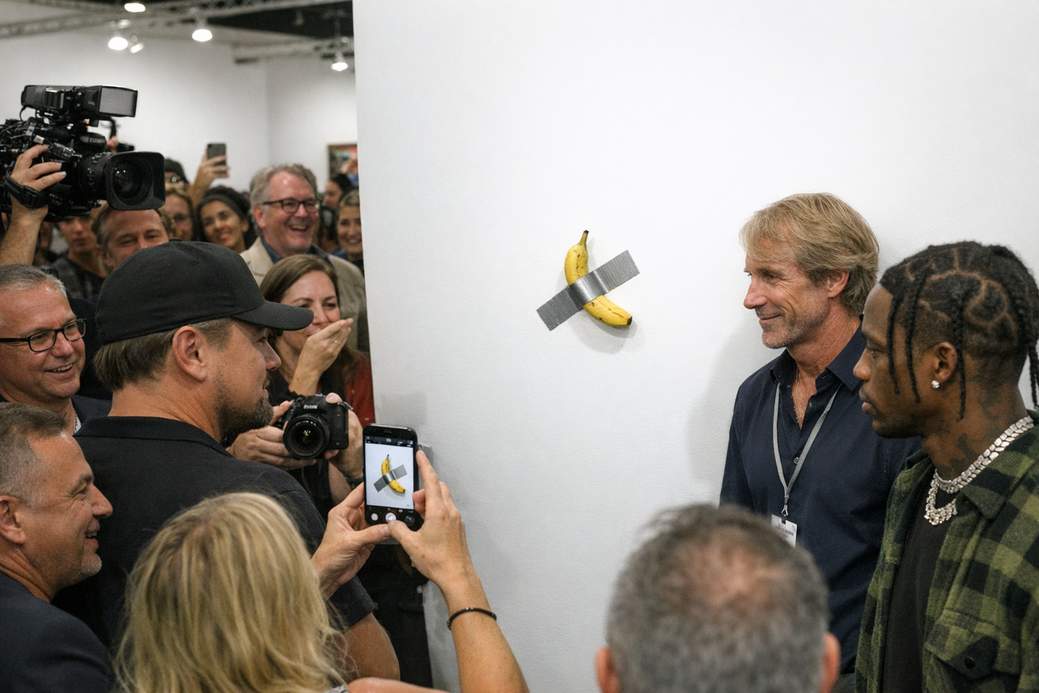
In December 2019, an ordinary banana and a strip of silver duct tape caused an extraordinary amount of noise. Maurizio Cattelan stuck a banana to a wall at Art Basel Miami Beach and labeled it a work of art. The gag was instant clickbait: visitors snapped photos, reporters wrote hot takes, and within days the piece had become a global meme.
Celebrity-studded chaos and bizarre price tags
The VIP preview where the banana debuted read like a Hollywood guest list — names like Leonardo DiCaprio, Michael Bay and Travis Scott were in the crowd. While other works at the fair traded hands for millions, Cattelan’s piece, issued in three editions, first sold for about $120,000 each and the third went for $150,000. Buyers got a certificate of authenticity and a how-to guide (including the small print: replace the banana regularly).
Virality, ridicule and the art of making people furious
People either adored it, laughed at it, or spent several hot takes angrily explaining why the whole thing was a sham — which only made it more famous. Within hours the duct-taped banana had splintered into memes, stunts, reaction videos and think pieces. The spectacle did its job: attention translated into cultural visibility and, later, a hefty price rise. In 2024 one of the editions reappeared at auction and fetched $6.24 million.
A deliberate playbook: provocation as strategy
Cattelan isn’t just winging it. He’s a professional mischief-maker who knows that controversy = eyeballs. Throughout art history, pushing the audience’s buttons has been a proven shortcut to fame: think of Caravaggio’s scandalous religious scenes or the sneers that greeted 19th-century modernists. Provocation can mean genuine innovation, but it can also be a premium marketing tactic.
Recognizable shock: familiar faces, big laughs
Unlike avant-garde experiments that bewilder only art insiders, Cattelan’s best-known pieces use instantly understood images and dark humor. His earlier stunts — a meteorite-battered Pope, a boy with the face of a dictator, or an art dealer literally taped to a wall — all lampoon power and prestige in plain sight. Using well-known figures lets the joke land for a wider crowd, not just gallery regulars.
Bananas, still lifes and the readymade tradition
Why choose a banana? It’s funny, slightly rude, and blessedly familiar. The choice taps into a long art-historical lineage: the humble still life and the century-old concept of the “readymade” — everyday objects presented as art. From Renaissance tabletop paintings to Duchamp’s turned-over urinal, artists have been asking what counts as art for centuries. Cattelan’s banana just does it with a peel and a punchline.
Rotting fruit, staged outrage and the business of spectacle
Part of the gag is literal: the banana will rot, so owners are told to swap in a fresh one — an ephemeral prop with a permanent certificate. That ephemeral-vs-authentic tension fuels the debate: some see a clever satire of art-market absurdity, others see a cynical stunt that commands obscene prices. Either way, Cattelan’s formula leverages satire, recognizability and a wink to art history to get people talking.
Not the most radical thing in the museum
For all the hand-wringing about price tags, the banana wasn’t the most expensive or the most revolutionary item on show. Its real trick was packaging familiar ideas — satire, the readymade, still life — into a neat, viral moment. In short: the banana wasn’t a break with history so much as a very loud, very funny remix.
Want more mischief?
If you’re craving more of Cattelan’s mix of provocation and prank, a major exhibition titled NIGHT opens at Berlin’s Neue Nationalgalerie on 10 September 2026. Expect more head-scratchers, more laughs, and probably more things you’ll insist you could have made at home — until you see the price tag.