One wild claim from the 1960s
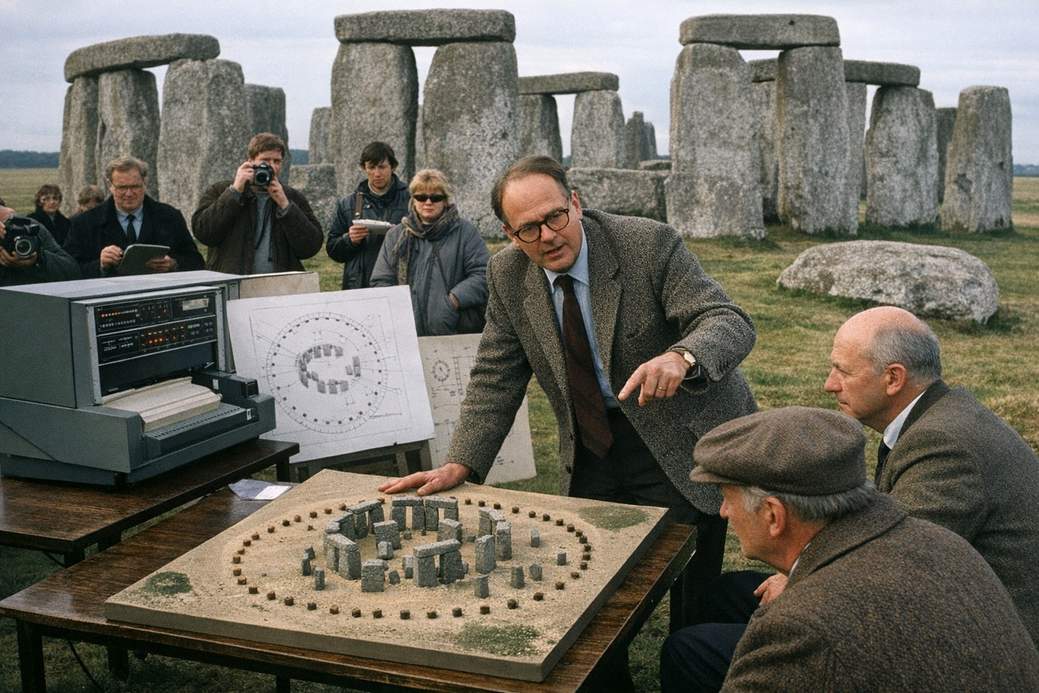
Picture this: it’s the swinging 60s, and a Cambridge-born astronomer rolls up with charts, an IBM-style computer, and the bold idea that Stonehenge was basically a giant ancient calculator. He argued the stones and holes lined up in such a way that prehistoric people could track the Moon and even forecast eclipses. It sounded outrageous, thrilling, and just the kind of headline that makes people lean into myth and mystery.
How the theory worked (in a nutshell)
The centerpiece of the claim was a set of holes and stone placements around the site. The researcher built a scale model, ran number-crunching on a computer at a US observatory, and noticed some repeatable patterns — especially a group of 56 holes that seemed to fit a lunar cycle pattern. The idea was that the ancients used those markers to count and predict when the Moon would behave oddly, like during eclipses.
From sundial to ritual stage
Supporters of the theory loved its neatness: Stonehenge wasn’t just a place for ceremonies or burials, they said, it doubled as an observatory. The alignment with solstices had been known for a long time, but this theory pushed the idea further — that the builders deliberately framed sightlines to key points on the horizon so the Sun and Moon could be watched and tracked.
The spectacle factor
Part of the appeal of the theory was the drama. Imagine ancient priests predicting an eclipse, gathering people on Salisbury Plain, and turning a natural event into political theater. That image of a priestly elite using celestial knowledge to impress or terrify the masses is exactly the sort of storytelling that captured the public imagination.
Problems and poke-holes (pun intended)
Not everyone bought it. Observers pointed out that a few of the holes might have been caused by tree growth or other non-astronomical reasons, which weakens the tidy-counting story. Later archaeological work showed Stonehenge wasn’t built all at once but in many phases over centuries — a messy construction timeline that doesn’t sit well with the idea of a single, purpose-built eclipse machine.
Modern scholarship and a humbler view
More recent research has largely moved away from the stone-computer image. Today’s experts tend to see Stonehenge as a monument tied to certain solar and lunar events in a ceremonial sense rather than as a precise scientific instrument. Some later communities in Britain did track lunar eclipses, but that evidence dates from well after Stonehenge’s main building phases.
Why the idea still matters
Even if the “eclipse computer” version is mostly retired now, it left a mark. It pushed researchers to look more closely at alignments, inspired public fascination, and reminded everyone how easily a clever pattern-plus-modern tech can turn into a compelling story about the past. It’s a neat example of science, showmanship, and the limits of reading intention into ancient stones.
Takeaway
Stonehenge keeps being enigmatic: part ritual stage, part calendar, part mystery. The 1960s theory that it was a prehistoric computer is a delightful chapter in the site’s history of interpretation — quirky, bold, and ultimately outpaced by later digs and data. But wonderful ideas like that are half the fun of studying ancient places: they make us ask new questions, even if the answers later change.